 NBCNGMI™
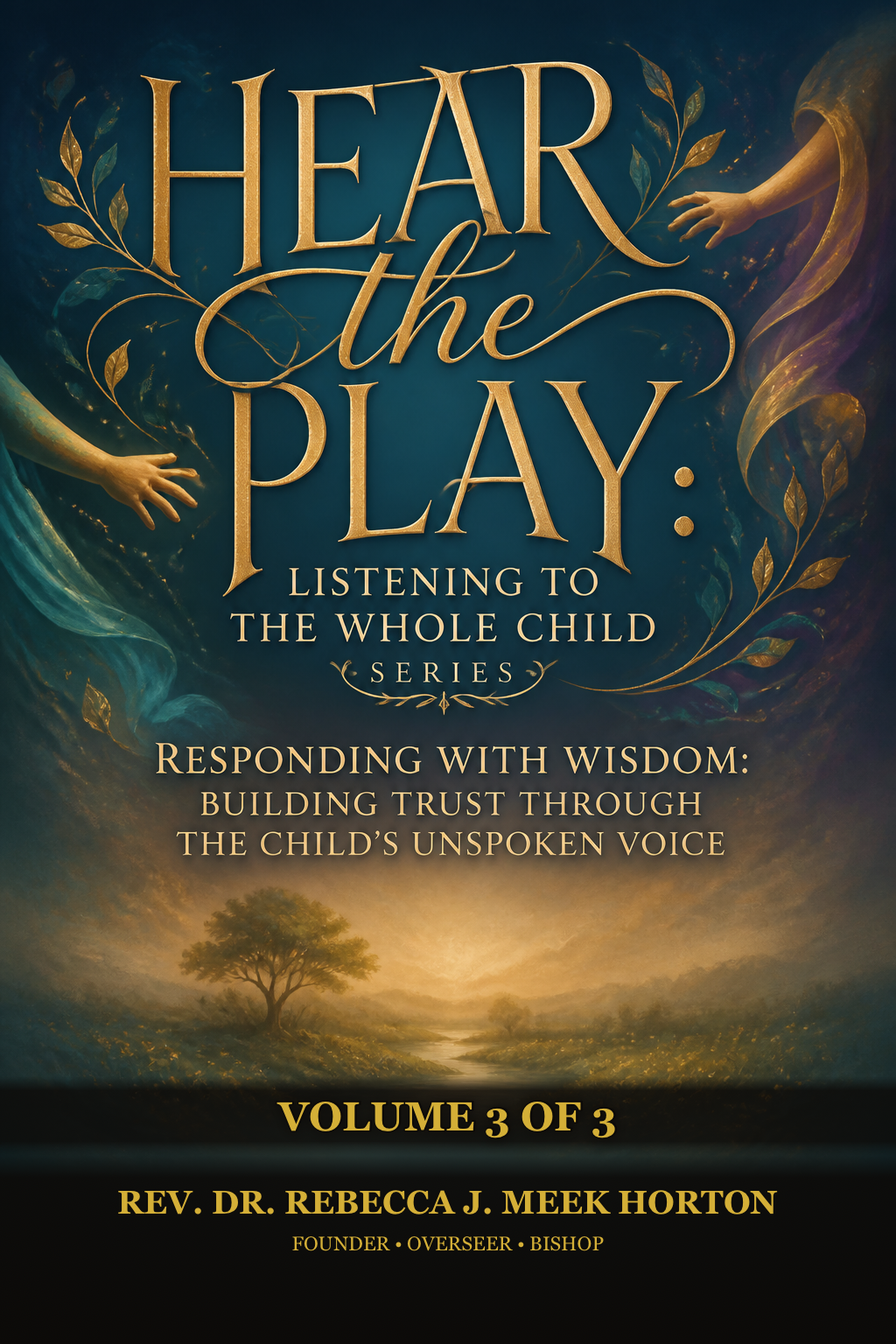
Hear the Play: Listening to the Whole Child · Volume 3
Responding With Wisdom: Building Trust Through the Child’s Unspoken Voice
Part 3 of 3 in the series "Hear the Play: Listening to the Whole Child". Series theme: Word are not the only way children communicate. Movement and Gestures can speak volumes. Hear in the Silence of Children.. Series arc: This three-book series moves from awareness to interpretation to faithful response. The first book helps adults recognize that children communicate through play, movement, gestur
Full publication
NBCNGMI MASTER KNOWLEDGE LIBRARY Featuring the works of The Sage, Apostle Prophet. Rev. Dr. Rebecca J. Meek Horton, Apostolic Prophetic Architect, NewBeing Creation Network Global Ministries, Inc. Integrated Framework Modalities™
Dedication
I dedicate this book to every child whose silence, play, movement, and gestures have been waiting for a wise and loving response. May the adults who read these pages learn to listen with patience, answer with tenderness, and build trust in the spirit of Jesus, who welcomed and valued children.
Purpose
I prepared this book to help leaders, parents, teachers, and caregivers respond wisely to the child who is speaking without words.
My prayer is that these pages help you move from noticing and interpreting a child’s play, movement, gesture, silence, and story into faithful action that builds safety, trust, and connection.
May this book help you honor the child’s voice with patience, clarity, and love, remembering that Jesus welcomed and valued children in Mark 10:14 (KJV).
Preface
This book grew out of a burden I have carried for children whose voices are present, but not always spoken.
I have watched children tell the truth with their shoulders, their silence, their drawings, their play, their distance, their sudden anger, their clinging, their hiding, and their questions that seem to come from nowhere. I have seen adults miss those messages, not because they did not care, but because they were listening only for words.
This final book in Hear the Play completes the movement from awareness, to observation, to response. It is not enough to notice that a child is communicating. It is not enough to interpret what may be happening beneath the surface. Love must learn how to answer wisely.
Jesus showed us that children are not interruptions to ministry, leadership, family, or formation. They are souls to be welcomed, protected, taught, and blessed.
Mark 10:14 (KJV)
But when Jesus saw it, he was much displeased, and said unto them, Suffer the little children to come unto me, and forbid them not: for of such is the kingdom of God.
That verse has searched me. It reminds me that our response to children matters deeply. We can make room, or we can make barriers. We can rush past the unspoken voice, or we can slow down enough to hear it with wisdom.
This book is for parents, teachers, leaders, caregivers, helpers, believers, and seekers who want to respond without controlling, correct without crushing, guide without shaming, and love without becoming careless. Children need warmth, but they also need structure. They need freedom, but they also need safety. They need to be heard, but they also need adults who can steward what they hear with maturity.
As you read, I invite you to move slowly. Think of real children, not theories. Notice what rises in you when a child’s behavior feels inconvenient, confusing, or hard. Let God shape your response before you speak.
The goal is not perfect parenting, perfect teaching, or perfect leadership. The goal is faithful response.
May this book help you build trust through safety, attunement, gentle questions, repair, boundaries, and the next wise step.
Before you continue, ask yourself: What child in my care may be speaking without words, and how can I respond with wisdom today?
Introduction
A child may enter a room without saying one word and still tell the truth.
The shoulders may rise. The hands may tighten. The eyes may look away. The body may move toward play, hide under a table, freeze at the doorway, cling to a trusted adult, push away help, or repeat the same story through blocks, dolls, drawings, motion, or silence.
Words are not the only way children communicate.
This book begins there.
Responding With Wisdom is the third movement in Hear the Play: Listening to the Whole Child. The first book invited us to recognize that children speak through play, movement, gesture, silence, and story. The second book helped us observe those signals with patience, care, and wisdom. This final book asks the necessary question: Now that we have noticed, how do we respond?
The answer is not control.
The answer is stewardship.
A child’s unspoken voice is not something to force open, rush, diagnose from a distance, or use against them. It is something to receive with humility. Children need adults who can slow down, see truthfully, ask gently, listen carefully, and take the next faithful step. They need leaders, parents, teachers, helpers, and caregivers who can respond without panic, shame, harshness, or fear.
Jesus gives us the posture.
Mark 10:14 (KJV)
But when Jesus saw it, he was much displeased, and said unto them, Suffer the little children to come unto me, and forbid them not: for of such is the kingdom of God.
Jesus did not treat children as interruptions. He welcomed them. He made room for them. He corrected adults who blocked their access. That matters for every home, classroom, church, ministry, and helping space.
This book is built on a simple argument: wise response builds trust when it honors the child’s whole communication, not only the child’s spoken words.
Trust is not built by good intentions alone. It is built through repeated patterns of safety, attunement, repair, clear boundaries, and faithful presence. A child learns, “I am seen here.” “I am not too much here.” “My feelings do not frighten this adult.” “My behavior will be guided, but my dignity will not be crushed.” “I can tell the truth in more than one way.”
That kind of trust takes time.
It also costs something.
It asks adults to slow their reactions. It asks us to examine our tone, our assumptions, our impatience, and our need to be in control. It asks us to stop calling every behavior “defiance” before we have asked what the child may be carrying, communicating, avoiding, seeking, or protecting. It asks us to hold two truths at once: children need compassion, and children need structure.
This book will help you practice that balance.
You will learn how to respond to nonverbal communication through safety, gentle questions, structured play, calm observation, repair after rupture, healthy boundaries, and collaborative next steps. You will be invited to notice the difference between reacting to behavior and responding to the child. You will be guided to move from vague concern to clear action.
This is not a book about becoming the child’s savior. It is not a replacement for wise pastoral care, medical care, counseling, school support, or trauma-informed professional help when those are needed. It is a teaching guide for faithful adults who want to steward their influence with wisdom.
Read slowly. Do not rush to use every practice at once. As you read, keep one child, one setting, or one relationship in mind. Notice what rises in you. Some chapters may reveal a child’s need. Others may reveal an adult pattern that needs RE-Alignment™. Receive both with humility.
The goal is not perfection.
The goal is faithful response.
Before you continue, choose one child or one caregiving setting you want to hold before God with care. Ask this simple question: What has this child been communicating that I may need to hear more wisely? Then write one sentence that begins, “My next faithful step is…”
The text of this title is not available to read yet.
Back to the library