 NBCNGMI™
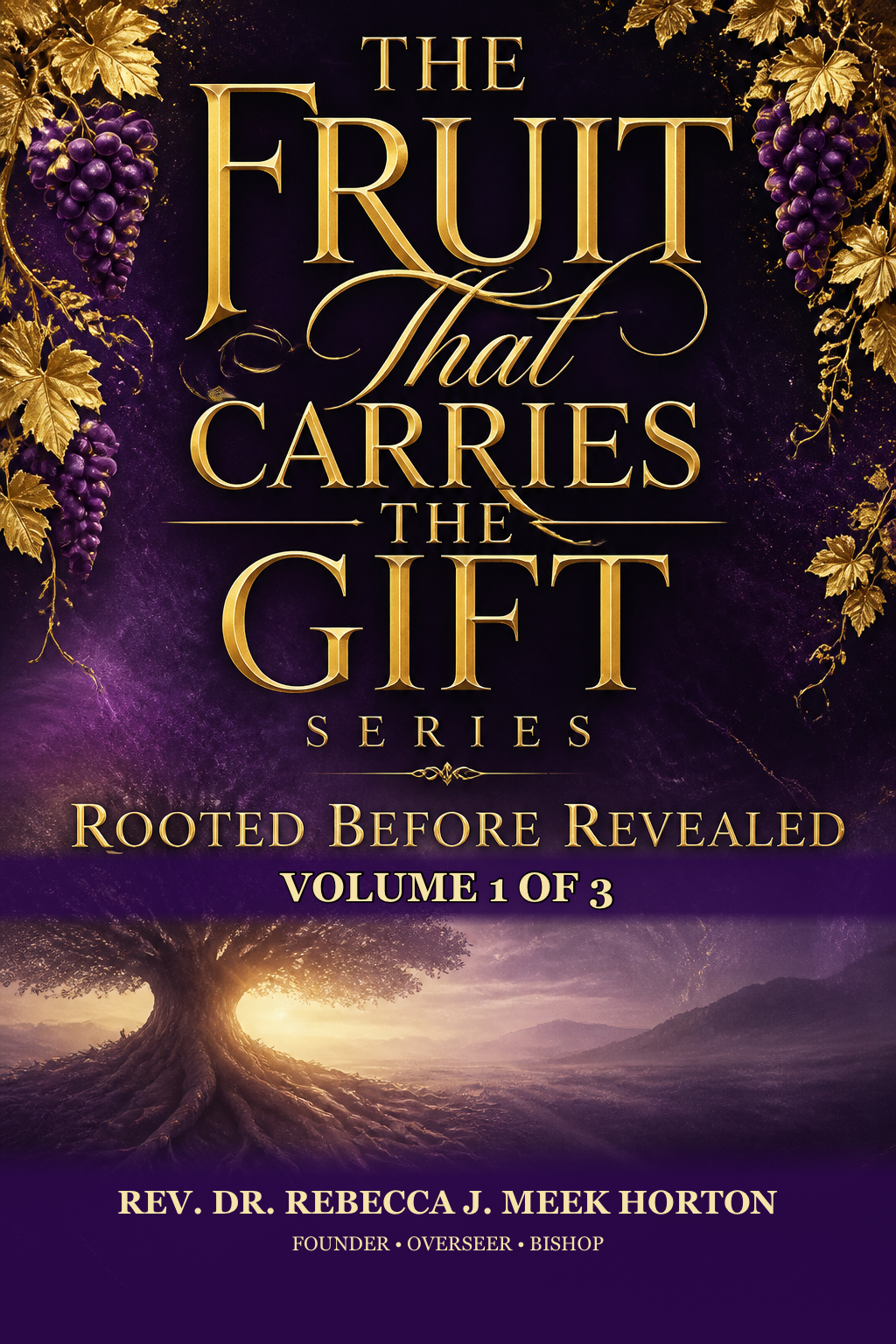
The Fruit That Carries the Gift · Volume 1
THE MASTER
Part 1 of 3 in the series "The Fruit That Carries the Gift". Series theme: Needed for Ministry Series arc: This three-book series moves from root to practice to stewardship. Book One establishes the inner life of abiding and the first governing expressions of Fruit; Book Two brings the Fruit into pressure, conflict, boundaries, and daily ministry reliability; Book Three shows how Spirit-formed character must govern gifts, teams, systems, and lasting service. Together, the books teach that ministry is safest and most fruitful when character carries charisma. How this book advances the series: This first book begins the series at the root, because ministry cannot safely reveal what the inner life has not learned to carry. This book lays the foundation: the Fruit of the Holy Spirit is one integrated work, not a collection of disconnected virtues. It covers abiding in Christ, the difference between spiritual character and spiritual charisma, and the ministry weight of love, joy, and peace. It should draw from the course orientation and Months One through Four, while expanding beyond the source with deeper teaching on abiding, the works of the flesh, daily Scripture engagement, and the hidden pressures servants face before they are visible.
Full publication
NBCNGMI MASTER KNOWLEDGE LIBRARY Featuring the works of The Sage, Apostle Prophet. Rev. Dr. Rebecca J. Meek Horton, Apostolic Prophetic Architect, NewBeing Creation Network Global Ministries, Inc. Integrated Framework Modalities™
Dedication
I dedicate this book to every servant who longs to carry the work of ministry with clean hands, a steady heart, and abiding love. May we learn from The Master before we try to represent Him, and may the Fruit of the Spirit form what the gift can never sustain alone.
Purpose
I wrote this book because ministry must begin where Jesus told us to begin: abiding in Him, for without Him we can do nothing John 15:5. My hope is that this work helps you see the Fruit of the Holy Spirit as one integrated work of God in the servant’s inner life, not separate virtues to perform. Before gifts are seen, love, joy, and peace must be formed, so what we carry in public is governed by what Christ has shaped in private.
Preface
I wrote this book for every person who feels the pull to serve and also feels the weight of what service requires.
Ministry is not only what we do in front of people. It is what is being formed in us when no one is clapping, calling, inviting, or recognizing us. Before the gift is seen, the root is tested. Before the assignment expands, the inner life must learn how to remain with Christ.
That is where this book begins.
The Fruit That Carries the Gift was born from a burden to help servants of God slow down long enough to be formed, not merely used. Gifts can open doors, but only Spirit-formed character can carry the weight of those doors once they open. Charisma may draw attention, but character protects the people we are called to serve.
John 15:5 (KJV)
I am the vine, ye are the branches: He that abideth in me, and I in him, the same bringeth forth much fruit: for without me ye can do nothing.
This first book, THE MASTER, returns us to the root. Christ is not only the One who sends us; He is the One who forms us. We do not produce the Fruit of the Spirit by pressure, personality, or performance. The Fruit is produced as we abide, yield, repent, listen, obey, and remain.
Galatians 5:22-23 (KJV)
But the fruit of the Spirit is love, joy, peace, longsuffering, gentleness, goodness, faith, Meekness, temperance: against such there is no law.
The Fruit of the Holy Spirit is one integrated work. It is not a scattered list of virtues we pick from when convenient. Love, joy, and peace are not decorative qualities for ministry; they are governing expressions of a life submitted to the Spirit.
This book also names the tension. The works of the flesh are real. Hidden pressure is real. Weariness, comparison, offense, ambition, fear, and the desire to be seen can all speak loudly in the heart of a servant. But they do not have to govern us.
My prayer is that these pages help you return to the Master, not as a performer seeking approval, but as a branch learning to abide.
Begin slowly. Read honestly. Let the Word search you before you serve with it.
The next faithful step is simple: stay with Christ long enough for His life to become visible in yours.
Introduction
Before ministry is public, the Master forms the servant.
This book begins there.
Not with platform. Not with gifting. Not with visibility. Not with the excitement of being used. It begins with the inner life, because ministry cannot safely reveal what the inner life has not learned to carry.
Many people desire to serve others, and that desire can be holy. But desire alone is not formation. Calling is not the same as character. Gift is not the same as Fruit. A person may be anointed, talented, intelligent, and sincere, yet still unready to carry the weight of people, pressure, conflict, disappointment, correction, and hidden obedience.
That is why this first book in The Fruit That Carries the Gift begins at the root.
John 15:4-5 (KJV) Abide in me, and I in you. As the branch cannot bear fruit of itself, except it abide in the vine; no more can ye, except ye abide in me. I am the vine, ye are the branches: He that abideth in me, and I in him, the same bringeth forth much fruit: for without me ye can do nothing.
The Fruit of the Holy Spirit is not a collection of disconnected virtues we try to perform when ministry requires it. It is one integrated work of the Spirit formed in the life of a believer who yields to God. Love, joy, and peace are not soft additions to ministry. They are governing realities. They shape how we speak, how we wait, how we correct, how we lead, how we suffer, and how we remain faithful when no one is watching.
Galatians 5:22-23 (KJV) But the fruit of the Spirit is love, joy, peace, longsuffering, gentleness, goodness, faith, Meekness, temperance: against such there is no law.
This book will not treat Fruit as decoration. Fruit is evidence of abiding. Fruit is the health of the servant before the work of the servant. Fruit is what keeps gifts from becoming dangerous in immature hands.
We will begin with abiding in Christ, because every lasting work of service must be rooted in Him. We will look honestly at the difference between spiritual character and spiritual charisma. We will examine the works of the flesh, not to shame the reader, but to tell the truth about what competes against spiritual maturity. Then we will give careful attention to love, joy, and peace as the first governing expressions of Fruit in this series.
Love teaches the servant why people must never become projects.
Joy teaches the servant how to remain alive in God without depending on favorable circumstances.
Peace teaches the servant how to carry pressure without spreading confusion.
These are not small matters. Anyone who desires to serve others will eventually meet hidden pressure. You may be misunderstood. You may be overlooked. You may be corrected. You may be asked to wait while others move ahead. You may carry burdens that cannot be explained publicly. In those places, the question is not only, “What is my gift?” The deeper question is, “What is governing me?”
Read this book slowly. Keep Scripture open. Let the Word search you before you use it to teach someone else. Do not rush to identify who else needs these lessons. Begin with your own life before God.
Each chapter is written to build understanding and move you toward practice. Pause where conviction comes. Write down what the Spirit brings to your attention. Tell the truth about patterns that need RE-Calibration™. Take the next faithful step without performing growth for others.
This is not a book about becoming impressive in ministry.
It is a book about becoming safe, steady, and fruitful in the hands of the Master.
Chapter 1 — ADMINISTRATOR ACCESS NOTICE
This Master Curriculum Manual™ is the governing blueprint for authorized administrators and curriculum stewards. It includes Facilitator guidance, assessment architecture, model answers, rubrics, and implementation safeguards. Learner, Facilitator, devotional-journal, and study-guide editions should be derived from this approved source without disclosing administrator-only material.
Copyright © 2005 NewBeing Creation Network Global Ministries, Inc. (NBCNGMI™) and Rebecca Meek Horton LLC. All rights reserved.
No portion of this document may be reproduced, distributed, stored, transmitted, adapted, taught, or republished in any form or by any means without prior written permission from the author or publisher, except as permitted by applicable law.
Expanded 12-Month Curriculum Edition, 2026.
NBCNGMI Integrated Framework™, WOW™, FATS™, FPFR™, RIPS™, PDRB™, CRDTAT™, SPRS™/PSRS™, LIFE STEP™ (LSG™), TRIM™, and associated curriculum language are proprietary marks and systems of NBCNGMI™ and/or their respective rights holders.
Scripture quotations are from the King James Version (KJV), which is in the public domain. Scripture text is preserved as Scripture; bracketed printer-supplied italics from the source text are rendered without brackets for reading clarity.
Chapter 2 — CURRICULUM SAFETY AND SCOPE
This Christian formation curriculum supports biblical education, spiritual reflection, and ministerial practice. It does not authorize diagnosis, psychotherapy, medical treatment, legal advice, crisis intervention beyond training, or the bypassing of safeguarding and reporting requirements. Facilitators must refer needs that exceed their role, competence, or authority.
Fruit assessments describe formation evidence; they never measure salvation, human worth, or GOD's love for a person.
Chapter 3 — TABLE OF CONTENTS
SectionPageFrom the Apostolic Prophetic Architect’s Desk4Course Orientation5Chapter 1 | Month One — The Fruit Of The Holy Spirit: One Fruit, Many Expressions8Chapter 2 | Month Two — Love (Agapē): Character Before Charisma15Chapter 3 | Month Three — Joy (Chara): Strength Rooted In GOD's Presence21Chapter 4 | Month Four — Peace (Eirēnē): Governed Within27Chapter 5 | Month Five — Longsuffering (Makrothymia): Formed In GOD's Timing33Chapter 6 | Month Six — Gentleness/Kindness (Chrēstotēs): Grace Made Usable39Chapter 7 | Month Seven — Goodness (Agathōsynē): Righteousness In Action45Chapter 8 | Month Eight — Faith/Faithfulness (Pistis): Steadfast Loyalty51Chapter 9 | Month Nine — Meekness/Gentleness (Prautēs): Strength Under Holy Restraint57Chapter 10 | Month Ten — Temperance/Self-Control (Enkrateia): Spirit-Governed Discipline63Chapter 11 | Month Eleven — The Fruit And Gifts Of The Holy Spirit Working Together69Chapter 12 | Month Twelve — Abiding, Integration, And Fruit That Remains76Addendum — Generosity, Modesty, and Chastity83Appendix A — Scripture by Chapter89Appendix B — Baseline and Final Fruit Inventory90Appendix C — FATS™ Reflection Worksheet92Appendix D — 5-A’s™ Monthly Formation Plan95Appendix E — Fruit-and-Gifts Ministry Review96Appendix F — Monthly Formation Evidence Rubric97Appendix G — Capstone and Continuing Formation Covenant98Appendix H — Facilitator Assessment Guidance100Fruit of the Holy Spirit Glossary102General Curriculum Glossary103About the Author105
Page numbers are finalized after the manuscript render and may update if content is edited.
Chapter 4 — FROM THE APOSTOLIC PROPHETIC ARCHITECT'S DESK
The Relationship Between Spiritual Character and Spiritual Charisma
The Fruit of the Holy Spirit is not spiritual decoration. It is the living evidence that the Spirit of GOD is governing the vessel from within. A gift may reveal what a believer can do under grace, but Fruit reveals the character through which that grace is carried. The Church needs both: spiritual power for service and spiritual character that makes service safe, credible, accountable, and loving.
First Corinthians 13:1-3 stands as a governing warning. Speech may be extraordinary, knowledge profound, faith impressive, giving sacrificial, and suffering visible; yet without love, the sound can become noise and the activity can become spiritually unprofitable. Character must govern charisma. Love must govern revelation. Meekness must govern authority. Faithfulness must govern follow-through. Self-control must govern access and appetite.
This curriculum was expanded from a twelve-step study into a twelve-month journey because Fruit is cultivated through time, practice, truth, prayer, correction, and repeated surrender. Each chapter opens with forgiving and asking for forgiveness because assessment must not begin from vengeance, accusation, or self-condemnation. Forgiveness does not erase truth, consequence, safety, or accountability; it clears the heart to examine with integrity.
Learners will read Scripture, receive Apostolic Prophetic Insight, apply approved NBCNGMI™ framework tools, answer questions, journal, discuss, demonstrate, and build formation evidence. The goal is not a polished vocabulary. The goal is a life that increasingly looks like Jesus Christ when pressure removes the performance.
WISDOM is not yours until YOU WALK IT. May this year move wisdom from the page into the pattern, from the lesson into the relationship, and from the confession into the structure of daily life.
The Sage, Apostle ProphetRev. Dr. Rebecca J. Meek HortonApostolic Prophetic Architect
Chapter 5 — Theological Foundation
- The KJV explicitly uses the phrase fruit of the Spirit in two key places: Galatians 5:22-23 names the nine expressions, and Ephesians 5:9 identifies the Fruit as being in all goodness and righteousness and truth. - The Fruit is singular and integrated. The nine expressions belong together and reveal the character of Christ being formed in a yielded believer. - Fruit is produced by the Holy Spirit through abiding relationship with Christ. Spiritual practices do not replace grace; they help the learner cooperate with grace. - Gifts are distributed for service; Fruit governs the motive, manner, relational effect, stewardship, and safety of their use. - Growth is progressive. The curriculum looks for accountable patterns of transformation, not perfection, comparison, or religious image management.
Chapter 6 — KJV Translation Note
This manual uses the King James Version. Galatians 5:22-23 names gentleness, goodness, faith, meekness, and temperance. In many contemporary translations and teaching settings, chrēstotēs is rendered kindness, pistis is rendered faithfulness in this ethical context, prautēs is rendered gentleness, and enkrateia is rendered self-control. The manual displays both terms where clarity requires it.
Chapter 7 — SUPPLEMENTAL ADDENDUM
Generosity, modesty, and chastity are discussed only in a separate historical-theological addendum because a traditional twelve-fruit enumeration names them distinctly. The addendum supports comparative understanding; it does not add three expressions to the course's governing nine or alter the 12-month chapter structure.
Chapter 8 — Course Learning Outcomes
- Articulate a biblical theology of the singular Fruit of the Spirit and its nine interdependent expressions. - Distinguish spiritual character from spiritual charisma while explaining how Fruit and Gifts should work together. - Use Scripture, prayer, forgiveness, reflection, and the 5-A's™ to examine patterns without shame or spiritual performance. - Apply WOW™, FATS™, FPFR™, and other authorized NBCNGMI™ modalities within their proper scope. - Demonstrate love, joy, peace, longsuffering, kindness, goodness, faithfulness, meekness, and self-control in observable decisions. - Give and receive correction with truth, dignity, accountability, and appropriate safeguarding. - Recognize when a need exceeds ministerial or Facilitator scope and make an appropriate referral. - Complete a capstone and a continuing formation covenant supported by evidence and accountable review.
Chapter 9 — The Four-Step Monthly Rhythm
StepPurposeFormation Step 1 — ReceiveBegin with forgiveness and prayer; read the chapter, key terms, and five Scripture selections; identify the central truth.Formation Step 2 — ExamineUse FATS™ and the monthly framework connection to tell the truth about present patterns, motives, effects, and needed repair.Formation Step 3 — PracticeComplete the action step, workbook exercise, journal work, discussion, and an observable Fruit-shaped response.Formation Step 4 — Demonstrate and IntegrateComplete the practical demonstration and knowledge check; receive feedback; document evidence; close reflectively in prayer.
Chapter 10 — Recommended Learning Evidence
- Monthly Scripture and knowledge checks — 25 percent - Workbook exercises, journals, and formation plans — 25 percent - Participation, discussion, practice, and demonstrations — 25 percent - Final capstone, Fruit inventory comparison, and continuing formation covenant — 25 percent
Administrators may adapt scheduling and weighting while preserving the curriculum's core theological content, chapter prayers, five Scripture studies, formation practice, evidence, safeguarding, and capstone requirements.
Chapter 11 — Scope and Sequence
MonthFormation FocusGoverning EmphasisFramework Connection1One FruitAbiding Before ProducingWOW™ and FATS™2LoveThe Governing SubstanceFATS™ and FPFR™3JoyA Deep Well, Not a Passing MoodWOW™ and PDRB™4PeacePeace as Guard and GovernorFPFR™ and SPRS™/PSRS™5LongsufferingWaiting Without WastingLIFE STEP™ (LSG™) and SAPP™6KindnessMaking the Goodness of GOD TangibleCRDTAT™ and FATS™7GoodnessClean Hands, Courageous ActionSWAT™ and the 5-A's™8FaithfulnessTrusted in the Small and the UnseenRIPS™ and TRIM™9MeeknessPower That Does Not Need to Prove ItselfFPFR™ and PDRB™10Self-ControlProtecting the AssignmentFATS™ and TRIM™11Fruit + GiftsCharacter Governing CharismaWOW™, SPRS™/PSRS™, and the 5-A's™12IntegrationFrom Course Completion to Continuing FormationNBCNGMI Integrated Framework™ synthesis
Chapter 12 — Facilitator Governance
- Use Facilitator—not leader—and Formation Step—not week—throughout delivery and derivative materials. - Begin every chapter gathering with the printed forgiveness-and-cleansing prayer; do not improvise language that pressures disclosure. - Keep personal sharing voluntary, protect confidentiality within stated limits, and explain safeguarding exceptions before discussion begins. - Do not use Fruit language to diagnose salvation, shame personality, demand compliance, or spiritualize abuse, illness, crisis, or disability. - Use each NBCNGMI™ modality only through its authorized definition, manual, scope, and training. The crosswalk in this manual is not a substitute for the governing modality manual. - Document and refer any concern that exceeds spiritual-education scope or triggers legal, ethical, pastoral, clinical, or safeguarding responsibilities.
Chapter 13 — OPENING PRAYER
Father GOD, we forgive every person who has wounded, offended, disappointed, misunderstood, or failed us, whether knowingly or unknowingly, and we release each one into Your care. We ask You to forgive us for every sin of thought, word, motive, attitude, omission, and action. Cleanse us through the blood of Jesus Christ, quiet every accusing voice, and make our hearts honest and teachable before You. Holy Spirit, open our understanding to the character You desire to form in us. Deliver us from the temptation to appear fruitful while resisting Your cultivation. Teach us to abide in Christ, receive correction without shame, and welcome the slow, holy work through which our lives become credible witnesses. Let this course produce more than information; let it produce transformation. In Jesus' name, Amen.
Chapter 14 — Learning Objectives
- Explain why Galatians names one Fruit with multiple expressions. - Identify and define the nine expressions named in Galatians 5:22-23. - Distinguish Spirit-produced character from image management or religious performance. - Identify present growth, neglected areas, and recurring resistance without shame or comparison. - Establish a twelve-month covenant of abiding, practice, accountability, and honest reflection.
Chapter 15 — One Fruit, Not Nine Unrelated Virtues
Galatians 5:22 uses the singular word fruit. The nine expressions are not a spiritual menu from which a believer selects preferred strengths. They belong together. Love without truth-shaped goodness can become indulgence. Faithfulness without gentleness can become hard. Self-control without joy can become cold performance. The Holy Spirit forms a whole witness in which every expression corrects, strengthens, and protects the others.
This course remains anchored in the nine expressions presented in the Greek text and the KJV: love, joy, peace, longsuffering, gentleness, goodness, faith, meekness, and temperance. Translation notes clarify common contemporary renderings such as kindness, faithfulness, gentleness, and self-control. A separate historical-theological addendum discusses generosity, modesty, and chastity as supplemental emphases found in a traditional twelve-fruit enumeration; they do not alter the nine-expression structure governing this course.
Fruit is evidence of life at work beneath the surface. A branch does not manufacture fruit by strain; it bears fruit because it remains connected to a living source. In the same way, Christian formation begins with union and communion with Christ. Practices matter, discipline matters, and accountability matters, but none of them replaces abiding. They position the believer to cooperate with grace rather than imitate its appearance.
Chapter 16 — Formation Is Cultivation, Not Performance
The works of the flesh and the Fruit of the Spirit reveal two different sources of government. Flesh-centered living asks, What do I want now? Spirit-led living asks, What reflects Christ, preserves covenant, and serves GOD's purpose? The transition is rarely instant or effortless. The Spirit exposes roots, motives, learned reactions, and defended habits so that the believer can repent, renew the mind, and practice a different response.
A single good act does not prove mature fruit, and a single failure does not erase genuine growth. Curriculum assessment therefore looks for patterns: increasing consistency, quicker repentance, cleaner motives, healthier repair, and wiser choices under pressure. The purpose is not to rank believers. It is to help each learner tell the truth about what is growing and what still needs cultivation.
Chapter 17 — Character Gives Credibility to Calling
Spiritual gifts may reveal capacity, but Fruit reveals formation. A person may communicate powerfully, perceive accurately, serve visibly, or lead effectively and still need deep character work. First Corinthians 13 refuses to separate spiritual activity from love. Heaven does not call noise maturity, and it does not call sacrifice profitable when love is absent.
This twelve-month journey places the inner life before the public platform. Each month asks the learner to receive truth, examine patterns, practice a Fruit-shaped response, and produce evidence of integration. The goal is a life that can carry assignment without injuring people, distorting witness, or abandoning integrity when pressure rises.
Chapter 18 — APOSTOLIC PROPHETIC INSIGHT
The Holy Spirit is calling the Body of Christ back to roots before reach, substance before visibility, and formation before display. Gifts can draw attention, but only character can steward attention without making the vessel the center. GOD is not merely increasing what believers can do; He is purifying who believers are while they do it.
Apostolic order asks whether the structure can carry the weight of the assignment. Prophetic discernment asks what hidden root will eventually become visible fruit. This course therefore begins below the surface. What is tolerated in private will eventually speak in public. What is surrendered in private can become holy strength in public.
Chapter 19 — Scripture 1 — Galatians 5:22-25 (KJV)
22 But the fruit of the Spirit is love, joy, peace, longsuffering, gentleness, goodness, faith,23 Meekness, temperance: against such there is no law.24 And they that are Christ's have crucified the flesh with the affections and lusts.25 If we live in the Spirit, let us also walk in the Spirit.
- What does the singular word fruit teach you about the wholeness of Spirit-formed character? - What would it look like for you to walk in the Spirit, not merely agree with spiritual truth?
Chapter 20 — Scripture 2 — John 15:4-5 (KJV)
4 Abide in me, and I in you. As the branch cannot bear fruit of itself, except it abide in the vine; no more can ye, except ye abide in me.5 I am the vine, ye are the branches: He that abideth in me, and I in him, the same bringeth forth much fruit: for without me ye can do nothing.
- Which habits help you abide in Christ, and which habits repeatedly disconnect your attention from Him? - Where have you been attempting to produce spiritual results through strain alone?
Chapter 21 — Scripture 3 — Matthew 7:16-20 (KJV)
16 Ye shall know them by their fruits. Do men gather grapes of thorns, or figs of thistles?17 Even so every good tree bringeth forth good fruit; but a corrupt tree bringeth forth evil fruit.18 A good tree cannot bring forth evil fruit, neither can a corrupt tree bring forth good fruit.19 Every tree that bringeth not forth good fruit is hewn down, and cast into the fire.20 Wherefore by their fruits ye shall know them.
- What recurring fruit is presently visible in your decisions, speech, and relationships? - How can you examine fruit without becoming condemning toward yourself or others?
Chapter 22 — Scripture 4 — Romans 8:5-6 (KJV)
5 For they that are after the flesh do mind the things of the flesh; but they that are after the Spirit the things of the Spirit.6 For to be carnally minded is death; but to be spiritually minded is life and peace.
- What has occupied your mind most consistently during the last month? - Which thought pattern needs to be brought under the government of the Holy Spirit?
Chapter 23 — Scripture 5 — Ephesians 5:8-10 (KJV)
8 For ye were sometimes darkness, but now are ye light in the Lord: walk as children of light:9 (For the fruit of the Spirit is in all goodness and righteousness and truth;)10 Proving what is acceptable unto the Lord.
- How does Ephesians 5:9 deepen Galatians 5:22-23 by connecting the Fruit with goodness, righteousness, and truth? - What would it mean to walk as a child of light while proving what is acceptable unto the Lord?
Chapter 24 — The 5-A’s™ Formation Cycle
Architecture™: Recognize GOD's design: the believer is formed to reveal the character of Christ, not merely display spiritual ability.
Alignment™: Compare present patterns with Galatians 5:22-25 and name one area of agreement and one area of resistance.
Assignment™: Practice daily abiding through Scripture, prayer, silence, and one intentional Fruit-shaped response.
Assessment™: Record what happened before, during, and after a pressured moment; look for patterns rather than isolated impressions.
Activation™: Enter a written twelve-month covenant with GOD, yourself, and the learning community.
Chapter 25 — Framework Connection
Use WOW™ to move from hearing wisdom to walking wisdom. Use FATS™ only after forgiveness: identify Feelings without enthroning them, Actions without excusing them, Thoughts without hiding them, and Spirit-led truth without using spirituality to avoid responsibility. The baseline inventory is descriptive, not condemning.
Chapter 26 — Four Formation Steps for the Month
1. Formation Step 1 — Receive: Read the chapter and all five Scripture selections aloud. Write a one-sentence definition of The Fruit Of The Holy Spirit: One Fruit, Many Expressions in your own words. 2. Formation Step 2 — Examine: Complete the monthly FATS™ reflection after forgiveness. Identify one trigger, one present pattern, one effect on others, and one truth requiring alignment. 3. Formation Step 3 — Practice: Complete the action step and exercise. Rehearse one observable The Fruit Of The Holy Spirit: One Fruit, Many Expressions-shaped response before the real pressure arrives. 4. Formation Step 4 — Demonstrate and Integrate: Complete the practical demonstration and knowledge check; receive feedback; document evidence and the next LIFE STEP™.
Chapter 27 — Workbook Exercise
Draw a fruit tree. In the roots, write the practices that nourish your life in Christ. On the trunk, write the values that keep you stable. On nine pieces of fruit, record one current evidence and one desired area of growth for each expression.
Chapter 28 — Journal and Reflection
- Where is Fruit most visible in my life when circumstances are easy? - Which expression becomes hardest to see when I feel threatened, hurried, unseen, or disappointed? - What does abiding in Christ need to look like in my actual schedule this month?
Reflection Notes:
__________________________________________________________________________________
__________________________________________________________________________________
__________________________________________________________________________________
Chapter 29 — Monthly Knowledge Check
1. Explain the importance of the singular word fruit in Galatians 5:22. 2. Describe the relationship between abiding and bearing Fruit. 3. Name two ways Fruit assessment differs from condemnation. 4. State the four movements in FATS™. 5. Why must character formation govern spiritual charisma?
Chapter 30 — REFLECTIVE CLOSING PRAYER
Father GOD, as we reflect on this beginning, we acknowledge both the Fruit already visible and the places that remain resistant. Thank You that Your correction is an invitation, not a sentence of rejection. Teach us to remain in Christ when growth feels slow, to repent quickly when our reactions expose an unhealthy root, and to receive accountability as protection. May our private formation agree with our public confession. Let love govern our gifts, truth govern our reflection, and the Holy Spirit govern our becoming. We offer You this year of cultivation. In Jesus' name, Amen.
Chapter 31 — OPENING PRAYER
Father GOD, we forgive every person who has wounded, offended, disappointed, misunderstood, or failed us, whether knowingly or unknowingly, and we release each one into Your care. We ask You to forgive us for every sin of thought, word, motive, attitude, omission, and action. Cleanse us through the blood of Jesus Christ, quiet every accusing voice, and make our hearts honest and teachable before You. Holy Spirit, search our love and expose every mixture of pride, fear, control, resentment, performance, and self-protection. Teach us to receive the love of GOD so deeply that we can extend truth with mercy, boundaries without cruelty, and service without needing applause. Form in us the love that looks like Jesus Christ. In Jesus' name, Amen.
Chapter 32 — Learning Objectives
- Define agapē as covenantal action rather than sentiment alone. - Evaluate speech, sacrifice, service, and correction through the standard of love. - Distinguish biblical love from approval, appeasement, enabling, and the absence of boundaries. - Practice one costly, wise, and accountable expression of love.
Chapter 33 — Love Is the Measure of Spiritual Substance
First Corinthians 13 does not minimize tongues, prophecy, knowledge, faith, generosity, or sacrifice. It places them under examination. Without love, impressive speech becomes noise, revelation does not make the vessel spiritually substantial, and sacrifice does not automatically produce heavenly profit. Love tests not only what was done, but why, how, and for whose good it was done.
Agapē begins in GOD. Believers do not create its source; they receive it and consent to become its carriers. This love moves toward another person's true good. It can comfort, wait, serve, confront, forgive, protect, and say no. Its constancy does not mean every relationship has equal access. Love can release vengeance while maintaining a necessary boundary.
Chapter 34 — Love Tells the Truth Without Weaponizing It
Sentiment without truth leaves people unprotected, while truth without love can become a weapon. Christlike love refuses both distortions. It does not expose a person to prove superiority, and it does not conceal serious harm to keep temporary peace. Love seeks restoration, protects the vulnerable, respects appropriate authority, and accepts that reconciliation requires truth, repentance, and safety.
The believer must also examine self-directed language. Shame is not humility. Receiving GOD's mercy does not excuse sin; it makes honest repentance possible. A person who believes love must be earned may serve compulsively, resent others secretly, or tolerate mistreatment to avoid abandonment. Agapē frees service from bargaining and boundaries from revenge.
Chapter 35 — Love Becomes Visible in Ordinary Decisions
Love matures through repeated choices: listening before assuming, refusing gossip, honoring commitments, repairing quickly, giving without manipulation, and speaking to people rather than about them. These actions may seem small, but they create relational architecture. Over time, people learn whether our presence is safe, our words are trustworthy, and our correction serves redemption rather than ego.
The question for this month is not simply, Do I feel loving? It is, What did love require of me in this actual moment? Sometimes it requires tenderness. Sometimes it requires patience. Sometimes it requires a clear boundary, documented accountability, or the courage to involve appropriate help. Love is wise enough to ask what preserves dignity, truth, and holy order together.
Chapter 36 — APOSTOLIC PROPHETIC INSIGHT
A platform can magnify whatever governs the heart. If love governs, influence becomes service. If insecurity governs, influence becomes a search for validation. If control governs, revelation can be used to dominate. The apostolic-prophetic vessel must therefore submit motive to the same scrutiny as message.
Love is not permission for disorder. It is the holy architecture through which truth can travel without becoming cruelty and power can move without becoming abuse. The more visible the gift, the more intentional the cultivation of love must become.
Chapter 37 — Scripture 1 — 1 Corinthians 13:1-3 (KJV)
1 Though I speak with the tongues of men and of angels, and have not charity, I am become as sounding brass, or a tinkling cymbal.2 And though I have the gift of prophecy, and understand all mysteries, and all knowledge; and though I have all faith, so that I could remove mountains, and have not charity, I am nothing.3 And though I bestow all my goods to feed the poor, and though I give my body to be burned, and have not charity, it profiteth me nothing.
- Which form of spiritual activity in this passage most challenges your present assumptions about maturity? - Where might a good action in your life be carrying a mixed motive that love needs to purify?
Chapter 38 — Scripture 2 — John 13:34-35 (KJV)
34 A new commandment I give unto you, That ye love one another; as I have loved you, that ye also love one another.35 By this shall all men know that ye are my disciples, if ye have love one to another.
- What makes Christ's own love the standard rather than personal preference? - What would help others recognize discipleship through the way you handle disagreement?
Chapter 39 — Scripture 3 — 1 John 4:7-8 (KJV)
7 Beloved, let us love one another: for love is of God; and every one that loveth is born of God, and knoweth God.8 He that loveth not knoweth not God; for God is love.
- How does receiving love from GOD affect your ability to love? - Which response in your life currently contradicts the claim that you know GOD?
Chapter 40 — Scripture 4 — Romans 5:5 (KJV)
5 And hope maketh not ashamed; because the love of God is shed abroad in our hearts by the Holy Ghost which is given unto us.
- What does it mean for love to be shed abroad in the heart by the Holy Ghost? - How can you cooperate with this work instead of forcing affection through willpower?
Chapter 41 — Scripture 5 — Colossians 3:12-14 (KJV)
12 Put on therefore, as the elect of God, holy and beloved, bowels of mercies, kindness, humbleness of mind, meekness, longsuffering;13 Forbearing one another, and forgiving one another, if any man have a quarrel against any: even as Christ forgave you, so also do ye.14 And above all these things put on charity, which is the bond of perfectness.
- Which quality surrounding love in this passage most needs practice in your relationships? - How does charity function as the bond of perfectness among the other virtues?
Chapter 42 — The 5-A’s™ Formation Cycle
Architecture™: See love as the load-bearing structure beneath ministry, relationship, correction, and sacrifice.
Alignment™: Identify where fear, pride, resentment, or approval-seeking has distorted your expression of love.
Assignment™: Choose one person and perform one wise act that serves the person's true good without seeking recognition.
Assessment™: Examine motive, method, effect, boundary, and willingness to repair.
Activation™: Write and speak a love covenant governing your words, boundaries, service, and conflict this month.
Chapter 43 — Framework Connection
Use FATS™ to name what arises when love becomes costly. Then move through FPFR™: Relax, Remember how Christ loved you, Review the facts, Release vengeance and false responsibility, Reorder the response, Reset the boundary or conversation, and Refuel in GOD's love.
Chapter 44 — Four Formation Steps for the Month
1. Formation Step 1 — Receive: Read the chapter and all five Scripture selections aloud. Write a one-sentence definition of Love in your own words. 2. Formation Step 2 — Examine: Complete the monthly FATS™ reflection after forgiveness. Identify one trigger, one present pattern, one effect on others, and one truth requiring alignment. 3. Formation Step 3 — Practice: Complete the action step and exercise. Rehearse one observable Love-shaped response before the real pressure arrives. 4. Formation Step 4 — Demonstrate and Integrate: Complete the practical demonstration and knowledge check; receive feedback; document evidence and the next LIFE STEP™.
Chapter 45 — Journal and Reflection
- When do I confuse love with being needed, approved, or constantly available? - Whom do I find hardest to love wisely, and what does wisdom require? - What repair have I delayed because apology feels too costly?
Reflection Notes:
__________________________________________________________________________________
__________________________________________________________________________________
__________________________________________________________________________________
Chapter 46 — Monthly Knowledge Check
1. Define agapē in relational and practical terms. 2. Name three spiritual activities declared insufficient without love in 1 Corinthians 13:1-3. 3. Explain the difference between love and appeasement. 4. Describe how FPFR™ can interrupt an unloving reaction. 5. Give one observable indicator that love governed a difficult conversation.
Chapter 47 — REFLECTIVE CLOSING PRAYER
Father GOD, as we look honestly at the way we love, we release the need to defend an image of goodness. Thank You for loving us first and for revealing where our love has been conditional, fearful, controlling, avoidant, or tired. Heal what makes closeness feel unsafe, and strengthen what makes wise boundaries necessary. Teach us to speak truth without contempt, give without bargaining, forgive without denying harm, and serve without seeking the center. May every gift operate through love and every relationship encounter the character of Christ. In Jesus' name, Amen.
Chapter 48 — OPENING PRAYER
Father GOD, we forgive every person who has wounded, offended, disappointed, misunderstood, or failed us, whether knowingly or unknowingly, and we release each one into Your care. We ask You to forgive us for every sin of thought, word, motive, attitude, omission, and action. Cleanse us through the blood of Jesus Christ, quiet every accusing voice, and make our hearts honest and teachable before You. Holy Spirit, restore our capacity to delight in GOD without denying the weight we carry. Expose every agreement with despair, comparison, cynicism, and emotional performance. Lead us into the presence where joy becomes strength, memory becomes testimony, and obedience becomes fellowship with Christ. In Jesus' name, Amen.
Chapter 49 — Learning Objectives
- Distinguish joy from pleasure, denial, excitement, and forced positivity. - Trace joy to communion, remembrance, gratitude, hope, and obedience. - Recognize patterns that drain attention from GOD's presence. - Develop a sustainable rhythm of rejoicing that makes room for honest grief.
Chapter 50 — Joy Has a Source Deeper Than Circumstance
Pleasure responds to something enjoyable; biblical joy responds to GOD's faithful presence and promise. Circumstances can affect emotion without becoming the final authority over the inner life. Joy does not require the believer to call pain pleasant. It declares that pain is not sovereign, abandonment is not the final story, and GOD remains present within the unfinished place.
Because joy is relational, it grows through attention. Psalm 16 connects fullness of joy with GOD's presence. The mind that continually rehearses threat, comparison, or disappointment can lose awareness of grace even when grace has not withdrawn. Rejoicing is therefore not pretending. It is the deliberate return of attention to what is true about GOD.
Chapter 51 — Joy and Grief Can Share the Same Sanctuary
Jesus wept, faithful people lamented, and the early church endured suffering; none of this contradicts joy. Mature joy makes room for tears without surrendering hope. Forced cheerfulness silences pain, but Spirit-formed joy accompanies the learner through pain and keeps the heart open to comfort, meaning, and future possibility.
A healthy community does not demand a smile as proof of faith. It bears burdens, listens without rushing, and helps the wounded remember what exhaustion may temporarily hide. When sadness is persistent, severe, or accompanied by danger, seeking qualified professional help is an act of stewardship, not spiritual failure.
Chapter 52 — Joy Is Strength for Obedience
Nehemiah declared that the joy of the LORD was the people's strength during restoration. Joy strengthens because it reconnects effort to presence and purpose. It helps the believer serve without living entirely from depletion and endure without allowing hardship to define identity.
Joy is cultivated through gratitude, worship, testimony, generosity, rest, beauty, fellowship, and obedient participation in what GOD is doing. These practices do not manipulate emotion. They widen awareness so that trouble is no longer the only evidence being considered.
Chapter 53 — APOSTOLIC PROPHETIC INSIGHT
The enemy of joy is not merely sadness; it is any governing narrative that makes disappointment larger than GOD. Cynicism often presents itself as discernment, but discernment can see danger without losing wonder. The prophetic vessel must refuse the pride of perpetual suspicion.
GOD is restoring joy as spiritual strength, not decorative enthusiasm. A people who can grieve truthfully and still rejoice cannot be easily governed by changing conditions. Their praise is not denial; it is disciplined remembrance.
Chapter 54 — Scripture 1 — Psalm 16:11 (KJV)
11 Thou wilt shew me the path of life: in thy presence is fulness of joy; at thy right hand there are pleasures for evermore.
- Where does this verse locate fullness of joy? - What practice would help you return your attention to GOD's presence today?
Chapter 55 — Scripture 2 — Nehemiah 8:10 (KJV)
10 Then he said unto them, Go your way, eat the fat, and drink the sweet, and send portions unto them for whom nothing is prepared: for this day is holy unto our Lord: neither be ye sorry; for the joy of the LORD is your strength.
- How can joy become strength during rebuilding rather than an escape from it? - What part of your assignment needs strength renewed through holy joy?
Chapter 56 — Scripture 3 — John 15:10-11 (KJV)
10 If ye keep my commandments, ye shall abide in my love; even as I have kept my Father's commandments, and abide in his love.11 These things have I spoken unto you, that my joy might remain in you, and that your joy might be full.
- What relationship does Jesus establish among abiding, obedience, love, and joy? - Where might delayed obedience be diminishing your joy?
Chapter 57 — Scripture 5 — 1 Peter 1:8-9 (KJV)
8 Whom having not seen, ye love; in whom, though now ye see him not, yet believing, ye rejoice with joy unspeakable and full of glory:9 Receiving the end of your faith, even the salvation of your souls.
- How can joy be present even when Christ is not physically seen? - What role does faith play in joy that exceeds explanation?
Chapter 58 — The 5-A’s™ Formation Cycle
Architecture™: Understand joy as a reservoir of strength supplied by communion with GOD.
Alignment™: Name the narratives, habits, and environments that repeatedly narrow your attention to loss alone.
Assignment™: Keep a thirty-day Joy and Testimony Journal that records grace without censoring grief.
Assessment™: Notice whether rejoicing increases presence, honesty, endurance, generosity, and hope.
Activation™: Share one testimony and create one joy-giving practice that can continue beyond this month.
Chapter 59 — Framework Connection
Use WOW™ to identify the wisdom hidden in a remembered mercy. Use PDRB™ to notice repeated emotional and behavioral pathways without treating them as permanent identity. Pause before the old pathway completes, name the truth now available, and rehearse a response that makes room for gratitude and honest feeling together.
Chapter 60 — Four Formation Steps for the Month
1. Formation Step 1 — Receive: Read the chapter and all five Scripture selections aloud. Write a one-sentence definition of Joy in your own words. 2. Formation Step 2 — Examine: Complete the monthly FATS™ reflection after forgiveness. Identify one trigger, one present pattern, one effect on others, and one truth requiring alignment. 3. Formation Step 3 — Practice: Complete the action step and exercise. Rehearse one observable Joy-shaped response before the real pressure arrives. 4. Formation Step 4 — Demonstrate and Integrate: Complete the practical demonstration and knowledge check; receive feedback; document evidence and the next LIFE STEP™.
Chapter 61 — Journal and Reflection
- What is the difference between the joy I perform and the joy I actually receive? - Which disappointment has become too large in my inner narrative? - How can I honor grief while refusing hopelessness?
Reflection Notes:
__________________________________________________________________________________
__________________________________________________________________________________
__________________________________________________________________________________
Chapter 62 — Monthly Knowledge Check
1. Define chara. 2. Explain why joy is not the same as pleasure. 3. Identify the source of fullness of joy in Psalm 16:11. 4. Name two practices that cultivate joy without denying grief. 5. Explain how joy strengthens obedience.
Chapter 63 — REFLECTIVE CLOSING PRAYER
Father GOD, as we reflect, we bring You both our gratitude and our grief. We refuse to manufacture a smile for approval, and we refuse to let disappointment become our god. Thank You for every mercy we noticed and every mercy that carried us before we could name it. Restore holy wonder, teach us to rejoice in Your presence, and give us courage to seek help when heaviness exceeds what we can safely carry alone. Let joy become strength for obedience, generosity, worship, and hope. In Jesus' name, Amen.
Chapter 64 — OPENING PRAYER
Father GOD, we forgive every person who has wounded, offended, disappointed, misunderstood, or failed us, whether knowingly or unknowingly, and we release each one into Your care. We ask You to forgive us for every sin of thought, word, motive, attitude, omission, and action. Cleanse us through the blood of Jesus Christ, quiet every accusing voice, and make our hearts honest and teachable before You. Prince of Peace, bring our minds, bodies, relationships, and decisions under Your government. Reveal where we have called avoidance peace or confusion discernment. Teach us to pray specifically, think soberly, establish wise boundaries, and move from Your settled presence rather than panic. In Jesus' name, Amen.
Chapter 65 — Learning Objectives
- Distinguish peace from silence, appeasement, avoidance, and emotional numbness. - Practice prayerful regulation before decision-making. - Identify thought patterns and relational conditions that disturb holy order. - Develop a peace plan that includes spiritual practice, wise boundaries, and appropriate support.
Chapter 66 — Peace Is Wholeness Under Right Government
Biblical peace is more than the absence of visible conflict. It carries the sense of wholeness and rightly ordered relationship. A quiet room can still contain fear, resentment, coercion, or unresolved harm. Holy peace does not hide disorder; it gives the believer enough inward steadiness to face disorder without becoming governed by it.
The peace of GOD guards heart and mind in Christ Jesus. A guard does not erase every external threat; a guard controls access. Peace helps the learner decide which thought will enter, which assumption needs testing, which demand is not an assignment, and which conversation requires preparation rather than immediate reaction.
Chapter 67 — Prayer, Thought, and Action Work Together
Philippians 4 does not offer vague spirituality. It joins prayer, supplication, thanksgiving, disciplined thinking, and practiced obedience. Peace grows when concern is brought to GOD specifically, facts are separated from feared predictions, and the learner takes the next faithful step that is actually available.
Regulation practices such as slower breathing, grounding attention, pausing before replying, walking, resting, or speaking with a trusted person can support wise response. They are not substitutes for prayer, and prayer is not a substitute for medical or mental-health care when symptoms are persistent, severe, or dangerous. Stewardship welcomes appropriate help.
Chapter 68 — Peacemaking Is Not Appeasement
Peacemakers pursue truth, justice, repair, and reconciliation where reconciliation is safe and possible. Appeasement sacrifices truth to reduce immediate tension. Peace may require naming harm, documenting a pattern, ending an unsafe interaction, asking a Facilitator for support, or waiting until all parties can speak responsibly.
Jesus gives peace differently from the world. The world often seeks control of conditions; Christ gives presence and authority within conditions. This frees the believer to act without allowing another person's urgency, anger, or confusion to dictate the pace of discernment.
Chapter 69 — APOSTOLIC PROPHETIC INSIGHT
Peace is a governor. It slows what fear wants to rush, questions what confusion wants to assume, and protects what GOD has ordered from decisions made under emotional invasion. Not every urgent voice carries divine timing.
The prophetic person must not confuse intensity with instruction. The apostolic person must not build permanent structure from a temporary panic. Peace preserves alignment by creating room for truth, counsel, timing, and the witness of the Holy Spirit to agree.
Chapter 70 — Scripture 1 — Philippians 4:6-7 (KJV)
6 Be careful for nothing; but in every thing by prayer and supplication with thanksgiving let your requests be made known unto God.7 And the peace of God, which passeth all understanding, shall keep your hearts and minds through Christ Jesus.
- What sequence of prayer, supplication, and thanksgiving is given before the promise of guarding peace? - Which specific request needs to replace generalized worry today?
Chapter 71 — Scripture 2 — Isaiah 26:3 (KJV)
3 Thou wilt keep him in perfect peace, whose mind is stayed on thee: because he trusteth in thee.
- What is the relationship between a stayed mind, trust, and perfect peace? - Where does your mind repeatedly wander when uncertainty rises?
Chapter 72 — Scripture 3 — John 14:27 (KJV)
27 Peace I leave with you, my peace I give unto you: not as the world giveth, give I unto you. Let not your heart be troubled, neither let it be afraid.
- How is Christ's gift of peace different from what the world gives? - What would it mean to refuse permission for fear to govern your next decision?
Chapter 73 — Scripture 4 — Colossians 3:15 (KJV)
15 And let the peace of God rule in your hearts, to the which also ye are called in one body; and be ye thankful.
- How can peace rule without becoming the only factor in discernment? - What role do gratitude and community play in this verse?
Chapter 74 — Scripture 5 — Romans 5:1 (KJV)
1 Therefore being justified by faith, we have peace with God through our Lord Jesus Christ:
- How does peace with GOD through Jesus Christ ground every other expression of peace? - Where are you trying to manufacture inner peace without resting in grace?
Chapter 75 — The 5-A’s™ Formation Cycle
Architecture™: Receive peace as the inward order from which sound discernment and action can proceed.
Alignment™: Separate facts, feelings, feared outcomes, other people's demands, and GOD-given responsibility.
Assignment™: Use a written Peace Plan before one recurring stressful situation.
Assessment™: Review body cues, thought clarity, tone, timing, boundaries, and the fruit produced after action.
Activation™: Practice a ninety-second sacred pause before non-emergency decisions and difficult replies.
Chapter 76 — Framework Connection
Use FPFR™ to interrupt escalation: Relax, Remember GOD's presence, Review facts, Release false urgency, Reorder the response, Reset the next boundary or step, and Refuel. Use SPRS™/PSRS™ only according to its authorized NBCNGMI™ protocol to support spiritually and practically responsible response.
Chapter 77 — Four Formation Steps for the Month
1. Formation Step 1 — Receive: Read the chapter and all five Scripture selections aloud. Write a one-sentence definition of Peace in your own words. 2. Formation Step 2 — Examine: Complete the monthly FATS™ reflection after forgiveness. Identify one trigger, one present pattern, one effect on others, and one truth requiring alignment. 3. Formation Step 3 — Practice: Complete the action step and exercise. Rehearse one observable Peace-shaped response before the real pressure arrives. 4. Formation Step 4 — Demonstrate and Integrate: Complete the practical demonstration and knowledge check; receive feedback; document evidence and the next LIFE STEP™.
Chapter 78 — REFLECTIVE CLOSING PRAYER
Father GOD, as we reflect on the unrest we carried into this month, we thank You for every place where Your peace interrupted fear, haste, or confusion. Show us what remains unresolved and what is simply unfinished. Give us courage to face truth, humility to seek support, and discipline to pause before reacting. Let peace guard access to our hearts and govern the timing of our words without making us passive before injustice or harm. We receive peace with You through Jesus Christ and ask for grace to become peacemakers. In Jesus' name, Amen.
Chapter 79 — OPENING PRAYER
Father GOD, we forgive every person who has wounded, offended, disappointed, misunderstood, or failed us, whether knowingly or unknowingly, and we release each one into Your care. We ask You to forgive us for every sin of thought, word, motive, attitude, omission, and action. Cleanse us through the blood of Jesus Christ, quiet every accusing voice, and make our hearts honest and teachable before You. GOD of all timing, expose impatience, entitlement, rage, hopelessness, and every attempt to force what You have not released. Give us endurance that remains awake, obedient, and wise. Teach us when to wait, when to act, when to establish safety, and when to release what is not ours to carry. Form hope in us through the process. In Jesus' name, Amen.
Chapter 80 — Learning Objectives
- Define longsuffering as active, governed endurance rather than passive stagnation. - Discern what must be endured, what must be confronted, and what must be released. - Recognize the character GOD forms in delay. - Practice patience through a specific waiting assignment and a measured response to provocation.
Chapter 81 — Patience Is Active Faithfulness
Longsuffering literally carries the idea of being long-tempered rather than quick-tempered. It is the capacity to remain under holy government when delay, difficulty, or provocation invites impulsive reaction. Patience is not inactivity. It prays, prepares, learns, serves, and obeys while refusing to seize an outcome through flesh-driven force.
Waiting reveals what urgency can hide. It exposes whether the learner trusts GOD's timing, needs control, fears being forgotten, or equates movement with progress. The waiting place can become either a rehearsal hall for anxiety or a formation room for character. What determines the difference is how the time is stewarded.
Chapter 82 — Suffering Can Produce Without Being Romanticized
Romans 5 describes a sequence from tribulation to patience, experience, and hope. This does not call evil good or require people to remain in abuse, danger, exploitation, or preventable harm. It declares that suffering does not have to have the final word. With grace, truth, support, and wise action, even painful seasons can produce tested character.
Patience includes limits. A person can forgive while reporting misconduct, love while leaving danger, wait on GOD while seeking counsel, and endure a process without tolerating ongoing violation. Longsuffering is directed by wisdom; it is never a command to become available for destruction.
Chapter 83 — GOD's Timing Forms Capacity
Some delays protect the learner from carrying weight before structure is ready. Others result from human systems, consequences, or opposition and must be addressed responsibly. Discernment asks: What is this season requiring me to become, learn, repair, prepare, or stop? The answer prevents vague waiting from becoming spiritualized avoidance.
Patience becomes visible in tone, pace, consistency, and the ability to remain faithful without constant reassurance. It refuses to force the fit. It does the next right thing and leaves timing, recognition, and outcome in GOD's hands.
Chapter 84 — APOSTOLIC PROPHETIC INSIGHT
Timing is as important as motive. A right action forced at the wrong time can damage what wisdom intended to preserve. Apostolic building requires sequence; prophetic fulfillment requires preparation. Delay is not automatically denial, and motion is not automatically obedience.
GOD uses waiting to expose the difference between hunger for assignment and hunger for validation. When the vessel can obey without applause and prepare without visible movement, patience has begun to mature into structural integrity.
Chapter 85 — Scripture 1 — Romans 5:3-5 (KJV)
3 And not only so, but we glory in tribulations also: knowing that tribulation worketh patience;4 And patience, experience; and experience, hope:5 And hope maketh not ashamed; because the love of God is shed abroad in our hearts by the Holy Ghost which is given unto us.
- What sequence of formation appears in this passage? - Where can you cooperate with character formation without calling suffering good?
Chapter 86 — Scripture 2 — James 1:2-4 (KJV)
2 My brethren, count it all joy when ye fall into divers temptations;3 Knowing this, that the trying of your faith worketh patience.4 But let patience have her perfect work, that ye may be perfect and entire, wanting nothing.
- What does patience need to be allowed to complete? - Which unfinished work in you becomes visible under testing?
Chapter 87 — Scripture 3 — Hebrews 10:35-36 (KJV)
35 Cast not away therefore your confidence, which hath great recompence of reward.36 For ye have need of patience, that, after ye have done the will of God, ye might receive the promise.
- What confidence are you tempted to cast away? - How are patience and doing the will of GOD connected?
Chapter 88 — Scripture 4 — Ecclesiastes 3:1 (KJV)
1 To every thing there is a season, and a time to every purpose under the heaven:
- What season are you actually in rather than wishing you were in? - Which action fits this season, and which action would be premature?
Chapter 89 — Scripture 5 — Psalm 27:14 (KJV)
14 Wait on the LORD: be of good courage, and he shall strengthen thine heart: wait, I say, on the LORD.
- How can waiting strengthen rather than diminish the heart? - What courageous act of preparation belongs inside your waiting?
Chapter 90 — The 5-A’s™ Formation Cycle
Architecture™: Recognize divine sequence: foundations, formation, timing, release, and stewardship belong together.
Alignment™: Identify where impatience has produced forcing, quitting, resentment, or careless timing.
Assignment™: Choose one delayed area and define the faithful preparation available now.
Assessment™: Measure consistency, tone, restraint, preparation, boundaries, and hope—not merely speed of outcome.
Activation™: Complete one LIFE STEP™ each day and record how SAPP™ supports endurance.
Chapter 91 — Four Formation Steps for the Month
1. Formation Step 1 — Receive: Read the chapter and all five Scripture selections aloud. Write a one-sentence definition of Longsuffering in your own words. 2. Formation Step 2 — Examine: Complete the monthly FATS™ reflection after forgiveness. Identify one trigger, one present pattern, one effect on others, and one truth requiring alignment. 3. Formation Step 3 — Practice: Complete the action step and exercise. Rehearse one observable Longsuffering-shaped response before the real pressure arrives. 4. Formation Step 4 — Demonstrate and Integrate: Complete the practical demonstration and knowledge check; receive feedback; document evidence and the next LIFE STEP™.
Chapter 92 — REFLECTIVE CLOSING PRAYER
Father GOD, as we review the places where we waited well and the places where we tried to force an answer, we receive Your mercy. Thank You for every delay that protected us, every process that prepared us, and every wise boundary that preserved life. Heal the fear of being forgotten. Strengthen us to do the next faithful thing without manufacturing an outcome. Give us courage to leave danger, humility to seek counsel, and patience to let holy formation finish its work. We entrust timing, recognition, and result to You. In Jesus' name, Amen.
Chapter 93 — OPENING PRAYER
Father GOD, we forgive every person who has wounded, offended, disappointed, misunderstood, or failed us, whether knowingly or unknowingly, and we release each one into Your care. We ask You to forgive us for every sin of thought, word, motive, attitude, omission, and action. Cleanse us through the blood of Jesus Christ, quiet every accusing voice, and make our hearts honest and teachable before You. Holy Spirit, soften what pain has made harsh without removing the wisdom that keeps us safe. Expose contempt, impatience, indifference, rescuing, and kindness performed for approval. Make our words useful, our listening attentive, our service dignifying, and our boundaries clean. Let people encounter the kindness of GOD through us. In Jesus' name, Amen.
Chapter 94 — Learning Objectives
- Explain the KJV term gentleness in Galatians 5:22 as the expression often translated kindness. - Recognize kindness as useful action, not pleasant language alone. - Practice listening, speech, service, and boundaries that preserve dignity. - Identify the difference between kindness, niceness, rescuing, and approval-seeking.
Chapter 95 — Kindness Is Grace in Reachable Form
Chrēstotēs carries the sense of goodness that is useful and gracious. Kindness notices what another person can actually receive and responds in a way that protects dignity. It may be a meal, a patient explanation, an accessible process, a gentle tone, a truthful referral, or simply the refusal to make someone's difficult moment harder.
Kindness begins with attention. We cannot serve wisely while assuming we already know what another person means. Hearing is a sense; listening is a skill we must cultivate. A kind response asks, What is being communicated beneath the first words? What is mine to offer? What would help without taking away the other person's agency?
Chapter 96 — Kindness Is Not Niceness or Rescue
Niceness often tries to keep interactions pleasant. Kindness seeks the true good. It may say no, correct misinformation, allow a consequence, or refer a need beyond one's scope. Rescuing can look kind while secretly being driven by anxiety, control, or the need to be indispensable. Wise kindness helps without creating dependence or resentment.
The learner must examine tone and timing. Correct words delivered with contempt do not reflect the Fruit. At the same time, gentle delivery does not require vague truth. Kindness can be clear because clarity reduces confusion and protects relationship.
Chapter 97 — Small Mercies Build Trust
Kindness often matures outside dramatic moments: remembering a name, answering without ridicule, making room, honoring confidentiality, checking accessibility, and following through. These repeated mercies reveal whether people are treated as interruptions or as bearers of GOD-given dignity.
Kindness also includes care for self as a stewarded vessel. Rest, asking for help, receiving support, and declining what exceeds capacity can prevent exhausted service from becoming irritability or hidden resentment.
Chapter 98 — APOSTOLIC PROPHETIC INSIGHT
Kindness is prophetic because it contradicts a culture trained in contempt. It announces the nature of GOD through ordinary treatment. Many will hear our doctrine only after they have encountered whether our presence honors their humanity.
Apostolic systems must be kind as well as accurate. If a ministry process humiliates the vulnerable, confuses the learner, or rewards only those who already know how to navigate it, structure itself needs repentance. Grace must become usable.
Chapter 99 — Scripture 1 — Ephesians 4:31-32 (KJV)
31 Let all bitterness, and wrath, and anger, and clamour, and evil speaking, be put away from you, with all malice:32 And be ye kind one to another, tenderhearted, forgiving one another, even as God for Christ's sake hath forgiven you.
- Which corrosive pattern must be put away for kindness to become credible? - How does forgiveness shape tenderness without erasing accountability?
Chapter 100 — Scripture 2 — Luke 6:35-36 (KJV)
35 But love ye your enemies, and do good, and lend, hoping for nothing again; and your reward shall be great, and ye shall be the children of the Highest: for he is kind unto the unthankful and to the evil.36 Be ye therefore merciful, as your Father also is merciful.
- How does kindness to the unthankful challenge transactional service? - What boundary would keep this practice wise rather than unsafe?
Chapter 101 — Scripture 3 — Titus 3:4-5 (KJV)
4 But after that the kindness and love of God our Saviour toward man appeared,5 Not by works of righteousness which we have done, but according to his mercy he saved us, by the washing of regeneration, and renewing of the Holy Ghost;
- What does GOD's kindness reveal about the source of salvation? - How can remembering mercy change the way you respond to another person's failure?
Chapter 102 — Scripture 5 — Colossians 3:12 (KJV)
12 Put on therefore, as the elect of God, holy and beloved, bowels of mercies, kindness, humbleness of mind, meekness, longsuffering;
- What does it mean to put on kindness intentionally? - Which companion virtue in this verse would strengthen your kindness most?
Chapter 103 — The 5-A’s™ Formation Cycle
Architecture™: Design interactions and systems so that truth, dignity, clarity, and appropriate care can travel together.
Alignment™: Notice where harshness, indifference, rescuing, or approval-seeking has distorted kindness.
Assignment™: Perform one useful act of kindness each week after asking what help is actually needed.
Assessment™: Review whether the action preserved dignity, agency, truth, boundaries, and follow-through.
Activation™: Redesign one recurring interaction or ministry process so it becomes more accessible and humane.
Chapter 104 — Framework Connection
Use FATS™ to examine what you feel, do, think, and spiritually discern when another person's need interrupts your plan. Apply CRDTAT™ only through its authorized NBCNGMI™ teaching protocol, with special attention to communication, interpretation, and accountable response rather than assumption.
Chapter 105 — Four Formation Steps for the Month
1. Formation Step 1 — Receive: Read the chapter and all five Scripture selections aloud. Write a one-sentence definition of Gentleness/Kindness in your own words. 2. Formation Step 2 — Examine: Complete the monthly FATS™ reflection after forgiveness. Identify one trigger, one present pattern, one effect on others, and one truth requiring alignment. 3. Formation Step 3 — Practice: Complete the action step and exercise. Rehearse one observable Gentleness/Kindness-shaped response before the real pressure arrives. 4. Formation Step 4 — Demonstrate and Integrate: Complete the practical demonstration and knowledge check; receive feedback; document evidence and the next LIFE STEP™.
Chapter 106 — REFLECTIVE CLOSING PRAYER
Father GOD, as we reflect on the people who encountered us this month, show us where our presence made grace easier to receive and where impatience made another burden heavier. Thank You for the kindness that led us to repentance. Free us from being pleasant without being useful and from helping in ways that control. Teach us to listen, ask, honor, clarify, follow through, and maintain clean limits. May our homes, ministries, classrooms, and systems make Your goodness tangible. In Jesus' name, Amen.
Chapter 107 — OPENING PRAYER
Father GOD, we forgive every person who has wounded, offended, disappointed, misunderstood, or failed us, whether knowingly or unknowingly, and we release each one into Your care. We ask You to forgive us for every sin of thought, word, motive, attitude, omission, and action. Cleanse us through the blood of Jesus Christ, quiet every accusing voice, and make our hearts honest and teachable before You. Righteous GOD, search the places where appearance and reality do not agree. Forgive compromise, selective integrity, silence before harm, and good deeds used to purchase admiration. Give us clean motives, courageous obedience, generous hands, and accountable methods. Teach us to overcome evil with good without becoming naive about evil. In Jesus' name, Amen.
Chapter 108 — Learning Objectives
- Define goodness as active integrity rather than reputation management. - Evaluate choices by truth, motive, method, impact, and accountability. - Practice doing good when recognition is absent or resistance is present. - Develop a plan for confronting evil without becoming governed by evil.
Chapter 109 — Goodness Is Integrity With Movement
Agathōsynē is not passive respectability. It is goodness that acts. It chooses what is right, serves the neighbor, resists corruption, protects the vulnerable, and refuses secret compromise. Kindness emphasizes gracious usefulness; goodness emphasizes moral quality and courageous alignment with what is right.
Goodness must be whole. A public act cannot compensate for private dishonesty, and a correct goal does not sanctify a corrupt method. The believer examines motive, process, impact, and accountability together. GOD's will does not need deception to succeed.
Chapter 110 — Goodness Requires Discernment and Courage
Micah 6:8 joins doing justly, loving mercy, and walking humbly with GOD. Justice without mercy can become severe; mercy without justice can leave harm unaddressed; both without humility can place the vessel beyond correction. Mature goodness holds these responsibilities together.
Overcoming evil with good is not pretending evil is harmless. It means refusing to adopt evil's methods. The believer can document, report, confront, vote, advocate, establish consequences, and protect others while rejecting revenge, deceit, and dehumanization.
Chapter 111 — Goodness Becomes a Pattern of Stewardship
Doing good can become tiring when results are delayed. Galatians 6 connects perseverance with harvest. The learner must distinguish exhaustion from disobedience and build rhythms that make faithfulness sustainable. Shared responsibility, rest, counsel, and clear scope protect good work from becoming self-destruction.
The light of goodness points beyond the worker to the Father. When goodness becomes branding, the beneficiary can become a prop. When goodness remains worship, dignity and accountability stay central.
Chapter 112 — APOSTOLIC PROPHETIC INSIGHT
GOD is not only exposing obvious darkness; He is examining the methods used in the name of light. A righteous cause carried by manipulation still damages witness. The architecture of goodness requires clean hands as well as compelling vision.
Prophetic courage names what is wrong. Apostolic goodness builds what is right. Mature ministry must do both: refuse corruption and construct truthful alternatives that can be sustained, examined, and entrusted to others.
Chapter 113 — Scripture 1 — Micah 6:8 (KJV)
8 He hath shewed thee, O man, what is good; and what doth the LORD require of thee, but to do justly, and to love mercy, and to walk humbly with thy God?
- How do justice, mercy, and humility correct one another? - Which of these three is least visible in your present decision-making?
Chapter 114 — Scripture 2 — Ephesians 5:8-10 (KJV)
8 For ye were sometimes darkness, but now are ye light in the Lord: walk as children of light:9 (For the fruit of the Spirit is in all goodness and righteousness and truth;)10 Proving what is acceptable unto the Lord.
- What evidence belongs to walking as a child of light? - How can you prove what is acceptable to the Lord before acting?
Chapter 115 — Scripture 3 — Romans 12:9, 21 (KJV)
9 Let love be without dissimulation. Abhor that which is evil; cleave to that which is good.21 Be not overcome of evil, but overcome evil with good.
- What does love without dissimulation require you to reject and embrace? - How can good overcome evil in your current situation without ignoring accountability?
Chapter 116 — Scripture 4 — Galatians 6:9-10 (KJV)
9 And let us not be weary in well doing: for in due season we shall reap, if we faint not.10 As we have therefore opportunity, let us do good unto all men, especially unto them who are of the household of faith.
- What good work are you tempted to abandon from weariness? - What support or boundary would make continued faithfulness sustainable?
Chapter 117 — Scripture 5 — Matthew 5:16 (KJV)
16 Let your light so shine before men, that they may see your good works, and glorify your Father which is in heaven.
- How can good works direct glory to the Father rather than the worker? - Where might visibility be competing with service?
Chapter 118 — The 5-A’s™ Formation Cycle
Architecture™: Establish truth, justice, mercy, humility, and accountability as load-bearing elements of good work.
Alignment™: Examine whether motive, method, message, and impact agree with the stated righteous goal.
Assignment™: Choose one neglected good that is within your actual responsibility and capacity.
Assessment™: Invite review from someone who can question your blind spots and inspect the effect on those served.
Activation™: Complete the good work or create a sustainable handoff plan rather than relying on intention alone.
Chapter 119 — Framework Connection
Use the 5-A's™ to move goodness from aspiration to accountable action. Engage SWAT™ only within its authorized spiritual-warfare teaching and under proper ministry governance; never use warfare language to avoid facts, accountability, safeguarding, or the need to correct one's own conduct.
Chapter 120 — Four Formation Steps for the Month
1. Formation Step 1 — Receive: Read the chapter and all five Scripture selections aloud. Write a one-sentence definition of Goodness in your own words. 2. Formation Step 2 — Examine: Complete the monthly FATS™ reflection after forgiveness. Identify one trigger, one present pattern, one effect on others, and one truth requiring alignment. 3. Formation Step 3 — Practice: Complete the action step and exercise. Rehearse one observable Goodness-shaped response before the real pressure arrives. 4. Formation Step 4 — Demonstrate and Integrate: Complete the practical demonstration and knowledge check; receive feedback; document evidence and the next LIFE STEP™.
Chapter 121 — Monthly Knowledge Check
1. Define agathōsynē. 2. State the three requirements in Micah 6:8. 3. Explain why a right goal does not justify a corrupt method. 4. Name the five areas in the Goodness Integrity Review. 5. Describe one difference between kindness and goodness.
Chapter 122 — REFLECTIVE CLOSING PRAYER
Father GOD, as we reflect on our choices, we thank You for every opportunity to do what was right, useful, just, and merciful. Where our motives were mixed or our methods were careless, grant repentance and repair. Deliver us from goodness performed for visibility and from silence that protects comfort at another person's expense. Give us courage without contempt, mercy without denial, and humility that remains accountable. May our light direct attention to You, and may our work leave people safer, stronger, and more able to flourish. In Jesus' name, Amen.
Chapter 123 — OPENING PRAYER
Father GOD, we forgive every person who has wounded, offended, disappointed, misunderstood, or failed us, whether knowingly or unknowingly, and we release each one into Your care. We ask You to forgive us for every sin of thought, word, motive, attitude, omission, and action. Cleanse us through the blood of Jesus Christ, quiet every accusing voice, and make our hearts honest and teachable before You. Faithful GOD, expose inconsistency, avoidance, double speech, abandoned commitments, and the fear that makes us unreliable. Anchor our trust in Your character. Teach us to honor small assignments, communicate honestly when capacity changes, repair what we have neglected, and remain loyal to truth when faithfulness costs us. In Jesus' name, Amen.
Chapter 124 — Learning Objectives
- Explain why pistis can communicate both faith and faithfulness. - Ground human faithfulness in the unchanging faithfulness of GOD. - Evaluate reliability in time, speech, stewardship, covenant, and completion. - Create a repair and completion plan for one neglected commitment.
Chapter 125 — GOD's Faithfulness Is the Foundation
Believers do not invent faithfulness through personality or perfectionism. They answer the GOD whose compassions are new every morning and whose faithfulness is great. Remembering His constancy produces trust, and trust creates the stability from which covenant obedience can grow.
Faith is not vague optimism. It receives GOD's word as trustworthy and acts accordingly. In the ethical list of Galatians 5, pistis also points to fidelity: the dependable character that keeps faith with GOD and people.
Chapter 126 — Faithfulness Is Measured in the Small
Jesus connects faithfulness in little with faithfulness in much. Small responsibilities reveal habits of stewardship before larger opportunities magnify them. Returning a call, keeping a confidence, arriving prepared, recording decisions, honoring financial obligations, and communicating a delay are spiritual matters when they concern trust.
Faithfulness is not saying yes to everything. Overcommitment creates promises that capacity cannot carry. A faithful no is better than an impressive yes followed by disappearance. When circumstances change, reliability communicates early, renegotiates honestly, and accepts responsibility for impact.
Chapter 127 — Completion, Repair, and Endurance
Some assignments require endurance; others require a responsible release. Discernment asks whether GOD is calling for perseverance, redesign, delegation, or closure. Faithfulness is not attachment to an expired method. It is loyalty to divine purpose and truthful stewardship of present reality.
Repair is part of faithfulness. The learner who missed a commitment does not protect reputation through excuse. They acknowledge what happened, address harm, establish a realistic next step, and change the system that made repetition likely.
Chapter 128 — APOSTOLIC PROPHETIC INSIGHT
Heaven examines what can be entrusted, not merely what can be announced. A great vision carried by an unreliable rhythm remains vulnerable. Faithfulness turns revelation into stewardship and intention into trustworthy presence.
The hidden season is not wasted. It reveals whether the vessel serves assignment or applause. When no one is watching, structure is being formed. When recognition arrives, it will reveal rather than create that structure.
Chapter 129 — Scripture 1 — Luke 16:10 (KJV)
10 He that is faithful in that which is least is faithful also in much: and he that is unjust in the least is unjust also in much.
- Which little responsibility is presently revealing your stewardship pattern? - What would faithfulness require before asking for greater responsibility?
Chapter 130 — Scripture 3 — Lamentations 3:22-23 (KJV)
22 It is of the LORD'S mercies that we are not consumed, because his compassions fail not.23 They are new every morning: great is thy faithfulness.
- How does GOD's daily mercy restore hope after failure? - What faithful response can you make today because His compassions are new?
Chapter 131 — Scripture 4 — Hebrews 11:1, 6 (KJV)
1 Now faith is the substance of things hoped for, the evidence of things not seen.6 But without faith it is impossible to please him: for he that cometh to God must believe that he is, and that he is a rewarder of them that diligently seek him.
- How does faith give substance and evidence before visible completion? - What action would demonstrate that you believe GOD is and rewards diligent seeking?
Chapter 132 — Scripture 5 — Revelation 2:10 (KJV)
10 Fear none of those things which thou shalt suffer: behold, the devil shall cast some of you into prison, that ye may be tried; and ye shall have tribulation ten days: be thou faithful unto death, and I will give thee a crown of life.
- What does faithfulness unto death reveal about covenant loyalty? - Where do you need endurance, and where do you need counsel rather than solitary striving?
Chapter 133 — The 5-A’s™ Formation Cycle
Architecture™: Build commitments on truth, capacity, clear ownership, communication, records, and completion.
Alignment™: Compare what you promised, what you practiced, what changed, and what others experienced.
Assignment™: Repair or responsibly close one neglected commitment.
Assessment™: Track reliability through timeliness, accuracy, communication, follow-through, and willingness to repair.
Activation™: Adopt one repeatable stewardship system for calendar, tasks, communication, or documentation.
Chapter 134 — Framework Connection
Use RIPS™ and TRIM™ only according to their authorized NBCNGMI™ manuals. In this month, Facilitators should connect those tools to pattern recognition, truthful stewardship, repair, and the removal of repeated barriers to completion without inventing new definitions for the modalities.
Chapter 135 — Four Formation Steps for the Month
1. Formation Step 1 — Receive: Read the chapter and all five Scripture selections aloud. Write a one-sentence definition of Faith/Faithfulness in your own words. 2. Formation Step 2 — Examine: Complete the monthly FATS™ reflection after forgiveness. Identify one trigger, one present pattern, one effect on others, and one truth requiring alignment. 3. Formation Step 3 — Practice: Complete the action step and exercise. Rehearse one observable Faith/Faithfulness-shaped response before the real pressure arrives. 4. Formation Step 4 — Demonstrate and Integrate: Complete the practical demonstration and knowledge check; receive feedback; document evidence and the next LIFE STEP™.
Chapter 136 — Monthly Knowledge Check
1. Define pistis in both believing and ethical dimensions. 2. Explain the relationship between stewardship and faithfulness. 3. Name five indicators in the monthly assessment. 4. Describe the four responsible options for a neglected commitment. 5. Why is GOD's faithfulness the foundation for ours?
Chapter 137 — REFLECTIVE CLOSING PRAYER
Faithful GOD, as we review our commitments, we thank You that Your mercy meets us without making dishonesty acceptable. Show us what must be completed, repaired, renegotiated, delegated, or released. Free us from promises made for approval and from silence used to avoid disappointment. Make our yes trustworthy, our no clean, our records responsible, and our endurance wise. May we be found faithful in little, faithful in hidden places, and faithful when obedience costs more than recognition gives. In Jesus' name, Amen.
Chapter 138 — OPENING PRAYER
Father GOD, we forgive every person who has wounded, offended, disappointed, misunderstood, or failed us, whether knowingly or unknowingly, and we release each one into Your care. We ask You to forgive us for every sin of thought, word, motive, attitude, omission, and action. Cleanse us through the blood of Jesus Christ, quiet every accusing voice, and make our hearts honest and teachable before You. Jesus, meek and lowly in heart, expose the need to dominate, impress, retaliate, withdraw, or prove ourselves. Heal the insecurity that mistakes force for authority. Give us teachable spirits, restrained speech, courageous humility, and strength that protects rather than crushes. Teach us to restore others while watching our own hearts. In Jesus' name, Amen.
Chapter 139 — Learning Objectives
- Distinguish meekness from weakness, fear, passivity, and lack of conviction. - Practice receiving and giving correction without humiliation or domination. - Recognize body, thought, and behavior patterns that precede a forceful reaction. - Develop language for firm, gentle, and accountable response.
Chapter 140 — Meekness Is Governed Strength
Prautēs does not describe powerlessness. It describes strength that has accepted government. Jesus could confront hypocrisy, welcome children, remain silent before false accusation, and speak with authority because His response was governed by the Father's will rather than insecurity.
Uncontrolled strength becomes intimidation; unused strength can become neglect. Meekness asks what love, truth, timing, and responsibility require. It can speak firmly, intervene quickly, or remain silent, but the choice is not driven by the need to win the emotional moment.
Chapter 141 — Teachability Is a Test of Meekness
A person may sound gentle while being uncorrectable. Meekness becomes visible when feedback threatens self-image. The learner pauses, listens for what is true, asks clarifying questions, and separates the value of the correction from the imperfection of the messenger.
Receiving correction does not require accepting abuse, false accusation, or every opinion as truth. Secure humility can test what is said, reject what is false without contempt, and repent where evidence is clear.
Chapter 142 — Correction Should Aim at Restoration
Galatians 6 instructs spiritual people to restore in a spirit of meekness while considering themselves. Correction that delights in exposure, ignores power differences, or offers no path toward repair has departed from restoration. Meekness protects dignity without concealing danger.
Firmness and gentleness can occupy the same sentence. Tone, setting, evidence, confidentiality, authority, and follow-up all matter. In safeguarding situations, gentleness toward the person accused never removes the duty to protect, report, and follow lawful or organizational procedures.
Chapter 143 — APOSTOLIC PROPHETIC INSIGHT
Mature authority does not need theater. It can carry weight without raising volume, diminishing another person, or demanding immediate agreement. The loudest response is not always the strongest response.
Prophetic accuracy without meekness can wound the very person truth was meant to restore. Apostolic authority without teachability can build systems no one is allowed to question. GOD is forming vessels whose strength remains correctable.
Chapter 144 — Scripture 2 — Matthew 11:28-30 (KJV)
28 Come unto me, all ye that labour and are heavy laden, and I will give you rest.29 Take my yoke upon you, and learn of me; for I am meek and lowly in heart: and ye shall find rest unto your souls.30 For my yoke is easy, and my burden is light.
- What can you learn from the meekness and lowliness of Jesus? - How might His yoke change the way you carry responsibility?
Chapter 145 — Scripture 3 — Galatians 6:1 (KJV)
1 Brethren, if a man be overtaken in a fault, ye which are spiritual, restore such an one in the spirit of meekness; considering thyself, lest thou also be tempted.
- What makes restoration different from exposure or punishment? - Why must the corrector consider their own vulnerability?
Chapter 146 — Scripture 4 — 2 Timothy 2:24-25 (KJV)
24 And the servant of the Lord must not strive; but be gentle unto all men, apt to teach, patient,25 In meekness instructing those that oppose themselves; if God peradventure will give them repentance to the acknowledging of the truth;
- Which qualities must accompany correction? - How does remembering that GOD grants repentance affect the corrector's posture?
Chapter 147 — Scripture 5 — 1 Peter 3:15-16 (KJV)
15 But sanctify the Lord God in your hearts: and be ready always to give an answer to every man that asketh you a reason of the hope that is in you with meekness and fear:16 Having a good conscience; that, whereas they speak evil of you, as of evildoers, they may be ashamed that falsely accuse your good conversation in Christ.
- How can conviction, readiness, meekness, and a good conscience work together? - What would need to change in the way you defend your hope?
Chapter 148 — The 5-A’s™ Formation Cycle
Architecture™: Place authority under Christ, Scripture, accountability, safeguarding, and restorative purpose.
Alignment™: Identify where insecurity turns strength into domination, defensiveness, withdrawal, or performance.
Assignment™: Receive one piece of feedback and give one necessary correction using a meekness protocol.
Assessment™: Review tone, evidence, timing, power difference, teachability, protection, and repair path.
Activation™: Write a firm-and-gentle response script for one recurring conflict pattern.
Chapter 149 — Framework Connection
Use FPFR™ before correction so the response is reordered rather than discharged. Use PDRB™ to recognize the cues that precede domination or collapse: body activation, familiar thought, defensive story, and rehearsed behavior. Insert a holy pause before the old sequence completes.
Chapter 150 — Four Formation Steps for the Month
1. Formation Step 1 — Receive: Read the chapter and all five Scripture selections aloud. Write a one-sentence definition of Meekness/Gentleness in your own words. 2. Formation Step 2 — Examine: Complete the monthly FATS™ reflection after forgiveness. Identify one trigger, one present pattern, one effect on others, and one truth requiring alignment. 3. Formation Step 3 — Practice: Complete the action step and exercise. Rehearse one observable Meekness/Gentleness-shaped response before the real pressure arrives. 4. Formation Step 4 — Demonstrate and Integrate: Complete the practical demonstration and knowledge check; receive feedback; document evidence and the next LIFE STEP™.
Chapter 151 — REFLECTIVE CLOSING PRAYER
Lord Jesus, as we reflect on how we used strength this month, show us where our words restored and where they pressed, intimidated, avoided, or performed. Thank You that meekness does not require us to disappear. Teach us to carry authority without theater, conviction without contempt, and correction without humiliation. Give us courage to receive truth, wisdom to reject falsehood cleanly, and discipline to protect those who are vulnerable. May our strength remain submitted, teachable, and safe in Your hands. In Jesus' name, Amen.
Chapter 152 — OPENING PRAYER
Father GOD, we forgive every person who has wounded, offended, disappointed, misunderstood, or failed us, whether knowingly or unknowingly, and we release each one into Your care. We ask You to forgive us for every sin of thought, word, motive, attitude, omission, and action. Cleanse us through the blood of Jesus Christ, quiet every accusing voice, and make our hearts honest and teachable before You. Holy Spirit, reveal every appetite, impulse, habit, and emotional surge that has claimed authority over our choices. Forgive the ways we have tried to control others while neglecting self-government. Heal what we suppress, strengthen what is weak, and teach us to establish boundaries that protect body, mind, relationship, witness, and assignment. In Jesus' name, Amen.
Chapter 153 — Self-Control Is Government From Within
Enkrateia describes mastery over one's own impulses. It does not mean absence of desire or emotion. It means desire and emotion are heard without being enthroned. The Spirit strengthens the believer to pause, interpret, choose, and act in alignment with truth.
Control of others is not self-control. When anxiety rises, a person may manage everyone else's behavior in order to avoid governing their own response. Spirit-led temperance takes responsibility for personal speech, access, timing, consumption, and action while respecting the agency and accountability of others.
Chapter 154 — Discipline Requires Structure
Willpower is weakest when exhausted, isolated, triggered, or unprepared. Wise discipline therefore changes the environment: limits access, schedules rest, removes avoidable temptation, establishes accountability, plans food or finances, delays sending a message, or turns off a device. Structure is not a lack of faith; it is stewardship of known vulnerability.
A lapse should lead to truth and learning rather than secrecy and collapse. What preceded it? What need was being pursued? Which boundary failed? Who should be contacted? What repair is required? Self-control grows when shame no longer prevents honest assessment.
Chapter 155 — Freedom Serves Assignment
Paul describes disciplined training so that he will not become disqualified after preaching to others. This is not salvation by self-punishment. It is recognition that unmanaged appetite can compromise calling, harm people, and destroy credibility.
Temperance creates capacity for holy yes and holy no. It guards energy, attention, finances, sexuality, anger, speech, substances, food, technology, and ambition. Different areas may require different kinds of support, including pastoral care, accountability groups, medical treatment, or licensed professional care. Seeking help is a governed action.
Chapter 156 — APOSTOLIC PROPHETIC INSIGHT
Self-control is the fence around assignment. A gift may open territory that an unmanaged appetite later surrenders. The boundary that feels restrictive today may be preserving tomorrow's usefulness.
GOD is not forming people who never feel pressure; He is forming people who do not make pressure their prophet. The impulse does not get to announce identity, determine timing, or write the ending.
Chapter 157 — Scripture 1 — 1 Corinthians 9:24-27 (KJV)
24 Know ye not that they which run in a race run all, but one receiveth the prize? So run, that ye may obtain.25 And every man that striveth for the mastery is temperate in all things. Now they do it to obtain a corruptible crown; but we an incorruptible.26 I therefore so run, not as uncertainly; so fight I, not as one that beateth the air:27 But I keep under my body, and bring it into subjection: lest that by any means, when I have preached to others, I myself should be a castaway.
- What does purposeful spiritual training protect? - Which discipline would make your running less uncertain this month?
Chapter 158 — Scripture 2 — 2 Timothy 1:7 (KJV)
7 For God hath not given us the spirit of fear; but of power, and of love, and of a sound mind.
- How do power, love, and a sound mind work together? - Which fear-driven reaction needs to come under this threefold government?
Chapter 159 — Scripture 4 — Titus 2:11-12 (KJV)
11 For the grace of God that bringeth salvation hath appeared to all men,12 Teaching us that, denying ungodliness and worldly lusts, we should live soberly, righteously, and godly, in this present world;
- How does grace teach rather than merely excuse? - What worldly lust or habitual response must be denied for sober living to increase?
Chapter 160 — Scripture 5 — 1 Peter 5:8-9 (KJV)
8 Be sober, be vigilant; because your adversary the devil, as a roaring lion, walketh about, seeking whom he may devour:9 Whom resist stedfast in the faith, knowing that the same afflictions are accomplished in your brethren that are in the world.
- How are sobriety, vigilance, resistance, and faith related? - What support prevents vigilance from becoming isolated fear?
Chapter 161 — The 5-A’s™ Formation Cycle
Architecture™: Build freedom with boundaries, rhythms, support, truthful records, and access controls appropriate to the vulnerability.
Alignment™: Map the trigger, body cue, feeling, thought, urge, behavior, and consequence in one repeated cycle.
Assignment™: Install one environmental boundary and one relational accountability point.
Assessment™: Review frequency, intensity, recovery time, honesty, repair, and whether professional support is needed.
Activation™: Practice Pause—Name—Choose—Act in one high-risk moment and document the result.
Chapter 162 — Framework Connection
Use FATS™ after forgiveness to examine the cycle without excuse or self-condemnation. Use TRIM™ only through its authorized manual to support intentional removal, repair, and maintenance of patterns addressed in the curriculum. Where compulsion, withdrawal, danger, or significant impairment is present, refer to qualified care.
Chapter 163 — Four Formation Steps for the Month
1. Formation Step 1 — Receive: Read the chapter and all five Scripture selections aloud. Write a one-sentence definition of Temperance/Self-Control in your own words. 2. Formation Step 2 — Examine: Complete the monthly FATS™ reflection after forgiveness. Identify one trigger, one present pattern, one effect on others, and one truth requiring alignment. 3. Formation Step 3 — Practice: Complete the action step and exercise. Rehearse one observable Temperance/Self-Control-shaped response before the real pressure arrives. 4. Formation Step 4 — Demonstrate and Integrate: Complete the practical demonstration and knowledge check; receive feedback; document evidence and the next LIFE STEP™.
Chapter 164 — Journal and Reflection
- Which appetite becomes loudest when I am tired, lonely, angry, or afraid? - Where do I try to control another person instead of governing myself? - What boundary would protect rather than punish me?
Reflection Notes:
__________________________________________________________________________________
__________________________________________________________________________________
__________________________________________________________________________________
Chapter 165 — Monthly Knowledge Check
1. Define enkrateia. 2. State the difference between self-control and control of others. 3. List the parts of the Impulse Map. 4. Explain how grace teaches discipline in Titus 2. 5. Name two indicators that additional professional support may be appropriate.
Chapter 166 — REFLECTIVE CLOSING PRAYER
Holy Spirit, as we reflect on desire, pressure, and choice, we thank You for every pause in which a new response became possible. Where we failed, lead us into truth, repair, and renewed structure rather than secrecy. Teach us to honor the body, guard attention, discipline speech, steward time, and seek help without shame. Remove the need to control others, and strengthen the government of love and a sound mind within us. May every boundary protect freedom, witness, relationship, and assignment. In Jesus' name, Amen.
Chapter 167 — OPENING PRAYER
Father GOD, we forgive every person who has wounded, offended, disappointed, misunderstood, or failed us, whether knowingly or unknowingly, and we release each one into Your care. We ask You to forgive us for every sin of thought, word, motive, attitude, omission, and action. Cleanse us through the blood of Jesus Christ, quiet every accusing voice, and make our hearts honest and teachable before You. Giver of every good gift, forgive pride, envy, competition, impersonation, misuse of authority, and the desire to be seen more than to serve. Purify our motives and bring every gift under the lordship of Jesus Christ, the authority of Scripture, the order of the Church, and the government of love. Teach us to honor diverse gifts while requiring mature character and accountability. In Jesus' name, Amen.
Chapter 168 — Learning Objectives
- Distinguish Fruit from Gifts without separating their ministry purpose. - Explain why love is the indispensable context for every gift. - Evaluate gift expression through character, order, accountability, edification, and safeguarding. - Practice a team-based ministry scenario in which Fruit governs gifted action.
Chapter 169 — Fruit and Gifts Answer Different Questions
Spiritual gifts answer, How has grace equipped this person to serve the Body? Fruit answers, What kind of person is being formed while that service occurs? Gifts are diverse and distributed according to the Spirit's will. Fruit belongs to the shared calling of every believer. No one possesses every gift, but no believer is excused from love, joy, peace, longsuffering, kindness, goodness, faithfulness, meekness, and self-control.
Gift does not certify maturity. Capacity can operate before character has fully developed, which is why community, testing, training, and accountability matter. Neither impressive effect nor sincere intention removes the need to examine fruit.
Chapter 170 — Love Is the More Excellent Way
First Corinthians 12 introduces diverse gifts; chapter 13 governs them through love; chapter 14 directs their orderly use for edification. The sequence matters. Love is not an interruption between two discussions of power. It is the way power becomes spiritually useful.
A gift exercised through impatience, manipulation, rivalry, carelessness, or lack of restraint may still appear dramatic, but its manner contradicts the Spirit's character. Mature ministry asks not only, Was something powerful? but also, Was Christ revealed? Were people edified? Was dignity protected? Was the message tested? Was appropriate authority honored?
Chapter 171 — Order and Accountability Protect Everyone
The Body needs diverse members. Team ministry reduces the temptation to make one vessel the whole system. It creates room for discernment, interpretation, pastoral care, administration, documentation, and follow-up. Accountability does not quench the Spirit; when practiced humbly, it protects people from confusion and protects the vessel from isolation.
Safeguarding remains essential. Spiritual language must never be used to coerce disclosure, demand money, secure loyalty, bypass consent, diagnose illness, replace emergency response, or silence reports of harm. Fruitful ministry welcomes testing and remains within role, training, law, and organizational policy.
Chapter 172 — APOSTOLIC PROPHETIC INSIGHT
Charisma may open a door, but character determines what enters through it. The Church does not need less of the Holy Spirit's power; it needs power carried by vessels who love truth, welcome testing, respect order, and remain accountable after the moment of ministry ends.
The prophetic word must pass through the Fruit before it passes through the mouth. The apostolic plan must pass through the Fruit before it becomes structure. When love governs power, people are not used to validate the gift; the gift is used to serve the people.
Chapter 173 — Scripture 1 — 1 Corinthians 12:4-11 (KJV)
4 Now there are diversities of gifts, but the same Spirit.5 And there are differences of administrations, but the same Lord.6 And there are diversities of operations, but it is the same God which worketh all in all.7 But the manifestation of the Spirit is given to every man to profit withal.8 For to one is given by the Spirit the word of wisdom; to another the word of knowledge by the same Spirit;9 To another faith by the same Spirit; to another the gifts of healing by the same Spirit;10 To another the working of miracles; to another prophecy; to another discerning of spirits; to another divers kinds of tongues; to another the interpretation of tongues:11 But all these worketh that one and the selfsame Spirit, dividing to every man severally as he will.
- What do diversity and the Spirit's sovereignty teach about comparison? - How should the phrase to profit withal shape the purpose of gift expression?
Chapter 174 — Scripture 2 — 1 Corinthians 13:1-3 (KJV)
1 Though I speak with the tongues of men and of angels, and have not charity, I am become as sounding brass, or a tinkling cymbal.2 And though I have the gift of prophecy, and understand all mysteries, and all knowledge; and though I have all faith, so that I could remove mountains, and have not charity, I am nothing.3 And though I bestow all my goods to feed the poor, and though I give my body to be burned, and have not charity, it profiteth me nothing.
- What does this passage refuse to accept as a substitute for love? - How should love change the preparation, delivery, and follow-up of ministry?
Chapter 175 — Scripture 3 — Romans 12:6-10 (KJV)
6 Having then gifts differing according to the grace that is given to us, whether prophecy, let us prophesy according to the proportion of faith;7 Or ministry, let us wait on our ministering: or he that teacheth, on teaching;8 Or he that exhorteth, on exhortation: he that giveth, let him do it with simplicity; he that ruleth, with diligence; he that sheweth mercy, with cheerfulness.9 Let love be without dissimulation. Abhor that which is evil; cleave to that which is good.10 Be kindly affectioned one to another with brotherly love; in honour preferring one another;
- Which character instructions surround the use of gifts? - What would preferring one another in honour change in a gifted team?
Chapter 176 — Scripture 4 — 1 Peter 4:10-11 (KJV)
10 As every man hath received the gift, even so minister the same one to another, as good stewards of the manifold grace of God.11 If any man speak, let him speak as the oracles of God; if any man minister, let him do it as of the ability which God giveth: that God in all things may be glorified through Jesus Christ, to whom be praise and dominion for ever and ever. Amen.
- How does stewardship correct the idea that a gift belongs to the vessel for self-exaltation? - What practices ensure that GOD, rather than personality, receives glory?
Chapter 177 — Scripture 5 — 1 Corinthians 14:1 (KJV)
1 Follow after charity, and desire spiritual gifts, but rather that ye may prophesy.
- Why does the command to follow charity precede desire for spiritual gifts? - How can you pursue gifts without turning pursuit into comparison or performance?
Chapter 178 — The 5-A’s™ Formation Cycle
Architecture™: Place gifts within the Body, under Scripture, love, order, role clarity, testing, safeguarding, and accountable follow-up.
Alignment™: Examine motive, method, audience, authority, consent, edification, and the Fruit evident in delivery.
Assignment™: Serve in a team scenario where no one person controls discernment, delivery, response, and follow-up.
Assessment™: Use the Fruit-and-Gifts Ministry Review in Appendix D after each practice.
Activation™: Create a personal Gift Stewardship Covenant naming boundaries, accountability, and the Fruit expression needing most attention.
Chapter 179 — Framework Connection
Use WOW™ to ask what wisdom requires before, during, and after gift expression. Apply SPRS™/PSRS™ only under its authorized protocol. Use the 5-A's™ to ensure that spiritual activity moves through sound architecture, alignment, assignment, assessment, and activation rather than personality-driven spontaneity alone.
Chapter 180 — Four Formation Steps for the Month
1. Formation Step 1 — Receive: Read the chapter and all five Scripture selections aloud. Write a one-sentence definition of The Fruit And Gifts Of The Holy Spirit Working Together in your own words. 2. Formation Step 2 — Examine: Complete the monthly FATS™ reflection after forgiveness. Identify one trigger, one present pattern, one effect on others, and one truth requiring alignment. 3. Formation Step 3 — Practice: Complete the action step and exercise. Rehearse one observable The Fruit And Gifts Of The Holy Spirit Working Together-shaped response before the real pressure arrives. 4. Formation Step 4 — Demonstrate and Integrate: Complete the practical demonstration and knowledge check; receive feedback; document evidence and the next LIFE STEP™.
Chapter 181 — Journal and Reflection
- Which Fruit expression is most tested when my gift is overlooked or questioned? - Do I welcome testing after I believe I have heard from GOD? - Where could team ministry make my service safer and more fruitful?
Reflection Notes:
__________________________________________________________________________________
__________________________________________________________________________________
__________________________________________________________________________________
Chapter 182 — Monthly Knowledge Check
1. Distinguish Fruit from Gifts. 2. Explain the significance of 1 Corinthians 12–14 placing love at the center. 3. Name five safeguards for gift expression. 4. Define stewardship as it applies to spiritual gifts. 5. Describe how team ministry can reduce risk.
Chapter 183 — REFLECTIVE CLOSING PRAYER
Giver of gifts and Former of character, as we reflect on ministry, we lay down comparison, ownership, performance, and every need to make others validate us. Thank You for the diversity of Your Body and for every grace given to serve. Let love govern our motive, meekness govern our authority, peace govern our timing, faithfulness govern our follow-up, and self-control govern our boundaries. Make us willing to be tested, corrected, trained, and accountable. May every gift edify people and glorify Jesus Christ. In Jesus' name, Amen.
Chapter 184 — OPENING PRAYER
Father GOD, we forgive every person who has wounded, offended, disappointed, misunderstood, or failed us, whether knowingly or unknowingly, and we release each one into Your care. We ask You to forgive us for every sin of thought, word, motive, attitude, omission, and action. Cleanse us through the blood of Jesus Christ, quiet every accusing voice, and make our hearts honest and teachable before You. Vinedresser and Keeper of our souls, forgive every place where we treated completion as maturity, information as transformation, or public affirmation as private proof. Prune what cannot continue, strengthen what has begun to grow, and show us how every expression of the Fruit belongs together. Give us truthful evidence, humble gratitude, and a covenant for continuing formation. In Jesus' name, Amen.
Chapter 185 — Learning Objectives
- Integrate the nine expressions as one Spirit-formed witness. - Compare baseline and final evidence without shame, exaggeration, or comparison. - Complete a capstone ministry and relationship application. - Establish a continuing formation covenant and receive commissioning for fruitful service.
Chapter 186 — Integration Reveals Maturity
A year of study is valuable only as it becomes a way of living. Integration means the expressions of Fruit increasingly cooperate under pressure. Love does not abandon goodness, peace does not silence truth, patience does not tolerate danger, kindness does not rescue, faithfulness does not become rigidity, meekness does not disappear, and self-control does not suppress humanity.
The learner returns to the baseline inventory to identify evidence of change. Honest growth may appear as a quicker pause, a cleaner apology, an earlier request for help, a more reliable boundary, a completed commitment, or reduced need to dominate. These are not small when they represent a different government.
Chapter 187 — Pruning Protects Future Fruit
Jesus speaks of pruning fruitful branches so they may bear more. Some habits, roles, relationships, methods, and expectations may have served a season but now compete with future obedience. Pruning is not always punishment. It can be focused mercy that removes what drains capacity or distorts purpose.
Discernment should be communal where decisions affect others. The learner seeks Scripture, prayer, fruit, counsel, evidence, timing, and accountability. Major decisions should not be based on one emotional moment or one isolated spiritual impression.
Chapter 188 — Fruit Multiplies Through Witness and Structure
Fruit that remains blesses more than the original learner. It changes families, teams, ministries, systems, and the people those systems touch. Multiplication is not merely teaching the vocabulary. It is modeling the process: forgive, examine, listen, practice, repair, remain accountable, and return to Christ as source.
Commissioning therefore recognizes a beginning, not arrival. The graduate is sent to continue abiding, to serve within scope, to welcome correction, and to help create environments in which others can grow without coercion or shame.
Chapter 189 — APOSTOLIC PROPHETIC INSIGHT
GOD seeks a harvest that remains after the meeting ends, the applause fades, and the role changes. Lasting Fruit is seen in what the vessel repeatedly chooses when no one is arranging the moment for success.
The apostolic question is, Can this formation become a structure that blesses others? The prophetic question is, Does the present fruit agree with the future being declared? Commissioning must never outrun cultivation. We send people to continue becoming.
Chapter 190 — Scripture 1 — John 15:8, 16 (KJV)
8 Herein is my Father glorified, that ye bear much fruit; so shall ye be my disciples.16 Ye have not chosen me, but I have chosen you, and ordained you, that ye should go and bring forth fruit, and that your fruit should remain: that whatsoever ye shall ask of the Father in my name, he may give it you.
- How do bearing much Fruit and glorifying the Father belong together? - What does it mean for Fruit to remain beyond a single successful season?
Chapter 191 — Scripture 2 — Galatians 5:24-25 (KJV)
24 And they that are Christ's have crucified the flesh with the affections and lusts.25 If we live in the Spirit, let us also walk in the Spirit.
- What must be crucified for walking in the Spirit to become consistent? - Where is the Spirit inviting a next step rather than a final claim of arrival?
Chapter 192 — Scripture 3 — 2 Peter 1:5-8 (KJV)
5 And beside this, giving all diligence, add to your faith virtue; and to virtue knowledge;6 And to knowledge temperance; and to temperance patience; and to patience godliness;7 And to godliness brotherly kindness; and to brotherly kindness charity.8 For if these things be in you, and abound, they make you that ye shall neither be barren nor unfruitful in the knowledge of our Lord Jesus Christ.
- What does giving all diligence add to dependence on grace? - Which quality in this sequence needs intentional strengthening next?
Chapter 193 — Scripture 4 — Philippians 1:9-11 (KJV)
9 And this I pray, that your love may abound yet more and more in knowledge and in all judgment;10 That ye may approve things that are excellent; that ye may be sincere and without offence till the day of Christ;11 Being filled with the fruits of righteousness, which are by Jesus Christ, unto the glory and praise of God.
- How do love, knowledge, judgment, discernment, sincerity, and righteous Fruit connect? - What must you approve as excellent in the next season?
Chapter 194 — Scripture 5 — Colossians 1:9-10 (KJV)
9 For this cause we also, since the day we heard it, do not cease to pray for you, and to desire that ye might be filled with the knowledge of his will in all wisdom and spiritual understanding;10 That ye might walk worthy of the Lord unto all pleasing, being fruitful in every good work, and increasing in the knowledge of God;
- What relationship appears among knowledge, wisdom, worthy walking, Fruit, and growth? - What good work now belongs to your continuing formation covenant?
Chapter 195 — The 5-A’s™ Formation Cycle
Architecture™: Review the whole-life structure that supports abiding, Fruit, accountability, safeguarding, rest, and service.
Alignment™: Compare Month One and Month Twelve evidence and name growth, resistance, pruning, and unfinished work truthfully.
Assignment™: Complete the capstone: apply all nine expressions to one real relationship, decision, ministry process, or leadership responsibility.
Assessment™: Present evidence, receive Facilitator and peer feedback, and document repair or next steps.
Activation™: Sign the Continuing Formation Covenant and establish a ninety-day review date.
Chapter 196 — Framework Connection
This month synthesizes WOW™, SWAT™, FATS™, FPFR™, RIPS™, PDRB™, CRDTAT™, SPRS™/PSRS™, LIFE STEP™ (LSG™), and TRIM™ under the authorized NBCNGMI Integrated Framework™. The Master Manual does not replace the governing manuals for any modality. Facilitators use the approved definitions, scope, and safeguards while helping learners select the right tool for the actual formation need.
Chapter 197 — Four Formation Steps for the Month
1. Formation Step 1 — Receive: Read the chapter and all five Scripture selections aloud. Write a one-sentence definition of Abiding, Integration, And Fruit That Remains in your own words. 2. Formation Step 2 — Examine: Complete the monthly FATS™ reflection after forgiveness. Identify one trigger, one present pattern, one effect on others, and one truth requiring alignment. 3. Formation Step 3 — Practice: Complete the action step and exercise. Rehearse one observable Abiding, Integration, And Fruit That Remains-shaped response before the real pressure arrives. 4. Formation Step 4 — Demonstrate and Integrate: Complete the practical demonstration and knowledge check; receive feedback; document evidence and the next LIFE STEP™.
Chapter 198 — Journal and Reflection
- What evidence of transformation can I name without exaggeration? - What still requires pruning, counsel, practice, or healing? - How will my growth become a safer structure for others rather than a private achievement?
Reflection Notes:
__________________________________________________________________________________
__________________________________________________________________________________
__________________________________________________________________________________
Chapter 199 — REFLECTIVE CLOSING PRAYER
Father GOD, as we bring this twelve-month journey to a close, we do not declare ourselves finished; we declare our dependence renewed. Thank You for every root exposed, every response reordered, every apology made, every boundary strengthened, every commitment completed, and every mercy received. Prune what cannot accompany us, preserve what You have formed, and keep us abiding in Christ. Let our character make our gifts safer, our service cleaner, our relationships more truthful, and our witness more credible. We offer You the Fruit, the unfinished work, and the next season. Send us to continue becoming and to bear Fruit that remains. In Jesus' name, Amen.
Chapter 200 — ADDENDUM | GENEROSITY, MODESTY, AND CHASTITY
Supplemental Historical-Theological Study
The NBCNGMI™ course is governed by the nine expressions named in Galatians 5:22-23. Some historic Christian teaching enumerates twelve Fruit and names generosity, modesty, and chastity distinctly. These three terms are retained only in this addendum for comparative understanding. They do not revise Scripture, create three additional Fruit chapters, or change the 12-month curriculum structure.
Chapter 201 — OPENING PRAYER
Father GOD, we forgive every person who has wounded, offended, disappointed, misunderstood, or failed us, whether knowingly or unknowingly, and we release each one into Your care. We ask You to forgive us for every sin of thought, word, motive, attitude, omission, and action. Cleanse us through the blood of Jesus Christ, quiet every accusing voice, and make our hearts honest and teachable before You. Holy Spirit, guide us as we consider generosity, modesty, and chastity. Remove fear, shame, pride, control, excess, and every narrow teaching that has obscured dignity or excused harm. Give us open hands, humble presence, and integrated purity. Let these traditional expressions deepen our formation without dividing Your one holy work in us. In Jesus' name, Amen.
Chapter 202 — Relationship to the Governing Nine
Addendum TermRelated Expressions Within the Governing NineCourse ConnectionGenerosityLove, longsuffering, kindness, and goodnessOpen-handed stewardship that remains wise, free, useful, and accountable.ModestyLove, meekness, and temperanceHumble stewardship of attention, presentation, achievement, speech, and influence.ChastityGoodness, faithfulness, and temperanceHoly stewardship of the body, desire, covenant, consent, fidelity, and boundaries.
Chapter 203 — DEFINITION
Generosity is the readiness to give time, attention, resources, mercy, hospitality, and service freely and wisely for another person's true good.
Generosity grows from trust in GOD rather than pressure to prove goodness. It is not measured by spectacle or amount alone. The widow's offering, a timely hour of attention, truthful advocacy, shared knowledge, and a sustainable financial gift may each reveal a heart released from possessiveness.
Spirit-formed giving remains wise. It does not purchase loyalty, demand access, bypass consent, conceal financial disorder, or create dependence for the giver's emotional benefit. Generosity asks what is mine to share, what the receiver actually needs, what accountability requires, and what giving pattern can be sustained without neglecting prior covenant responsibilities.
Chapter 204 — APOSTOLIC PROPHETIC INSIGHT
Generosity is not merely the release of resources; it is the refusal to let scarcity, recognition, or control become lord of the hand. Apostolic stewardship gives with structure, and prophetic compassion gives with discernment. Open hands must still be clean hands.
Chapter 205 — 2 Corinthians 9:6-8 (KJV)
6 But this I say, He which soweth sparingly shall reap also sparingly; and he which soweth bountifully shall reap also bountifully.7 Every man according as he purposeth in his heart, so let him give; not grudgingly, or of necessity: for God loveth a cheerful giver.8 And God is able to make all grace abound toward you; that ye, always having all sufficiency in all things, may abound to every good work:
- How do purpose of heart, freedom from compulsion, cheerfulness, and sufficient grace govern giving?
Chapter 206 — Proverbs 11:24-25 (KJV)
24 There is that scattereth, and yet increaseth; and there is that withholdeth more than is meet, but it tendeth to poverty.25 The liberal soul shall be made fat: and he that watereth shall be watered also himself.
- What kind of generosity enriches both giver and receiver without becoming transactional?
Chapter 207 — Luke 6:38 (KJV)
38 Give, and it shall be given unto you; good measure, pressed down, and shaken together, and running over, shall men give into your bosom. For with the same measure that ye mete withal it shall be measured to you again.
- How can you practice this verse without treating giving as a formula for manipulating return?
Chapter 208 — DEFINITION
Modesty is the humble and dignified ordering of speech, presentation, conduct, influence, and attention so that neither self nor another person is reduced to display, comparison, or objectification.
Modesty is wider than clothing and must never be used to shame bodies or transfer responsibility for another person's thoughts or misconduct. Scripture addresses the heart's relationship to display, status, attention, and the kind of beauty that endures. Modesty asks whether presentation agrees with context, conscience, dignity, responsibility, and love.
This Fruit expression also governs platforms, titles, testimonies, wealth, spiritual language, and digital presence. A person can be fully covered and still be immodest through self-exaltation, while another can be visually expressive and remain dignified, appropriate, and humble. Wise teaching resists simplistic policing and forms accountable self-stewardship.
Chapter 209 — Philippians 2:3-4 (KJV)
3 Let nothing be done through strife or vainglory; but in lowliness of mind let each esteem other better than themselves.4 Look not every man on his own things, but every man also on the things of others.
- How do lowliness of mind and concern for others reorder the use of attention and influence?
Chapter 210 — 1 Timothy 2:9-10 (KJV)
9 In like manner also, that women adorn themselves in modest apparel, with shamefacedness and sobriety; not with broided hair, or gold, or pearls, or costly array;10 But (which becometh women professing godliness) with good works.
- How can this passage be taught as heart, conduct, and good works without using it to shame women or excuse others from self-control?
Chapter 211 — 1 Peter 3:3-4 (KJV)
3 Whose adorning let it not be that outward adorning of plaiting the hair, and of wearing of gold, or of putting on of apparel;4 But let it be the hidden man of the heart, in that which is not corruptible, even the ornament of a meek and quiet spirit, which is in the sight of God of great price.
- What inward quality does this passage describe as precious before GOD?
Chapter 212 — DEFINITION
Chastity is the Christ-centered integration and stewardship of sexuality, body, mind, desire, covenant, consent, fidelity, and conduct according to one's Christian vocation.
Chastity is not disgust toward the body. The body belongs to the Lord and is worthy of honor, safety, care, and holy stewardship. Christian purity concerns what a person does with desire and power: whether covenant is honored, consent is respected, people are treated as whole persons, and conduct agrees with truth.
Teaching on chastity must never blame victims, conceal abuse, pressure disclosure, or substitute prayer for reporting and qualified care. Abuse is the responsibility of the person who commits it. Where trauma, coercion, exploitation, compulsion, medical questions, or danger is present, Facilitators protect, document, report, and refer according to law, policy, role, and training.
Chapter 213 — APOSTOLIC PROPHETIC INSIGHT
Purity is not image management; it is integrity when desire, access, power, and secrecy meet. A public anointing does not cancel private boundaries. Apostolic order protects covenant, and prophetic truth brings hidden conduct into accountable light without exploiting the wounded.
Chapter 214 — 1 Corinthians 6:18-20 (KJV)
18 Flee fornication. Every sin that a man doeth is without the body; but he that committeth fornication sinneth against his own body.19 What? know ye not that your body is the temple of the Holy Ghost which is in you, which ye have of God, and ye are not your own?20 For ye are bought with a price: therefore glorify God in your body, and in your spirit, which are God's.
- How does belonging to GOD shape bodily dignity, boundaries, and stewardship?
Chapter 215 — 1 Thessalonians 4:3-5 (KJV)
3 For this is the will of God, even your sanctification, that ye should abstain from fornication:4 That every one of you should know how to possess his vessel in sanctification and honour;5 Not in the lust of concupiscence, even as the Gentiles which know not God:
- What does possessing one's vessel in sanctification and honour require in practice?
Chapter 216 — 2 Timothy 2:22 (KJV)
22 Flee also youthful lusts: but follow righteousness, faith, charity, peace, with them that call on the Lord out of a pure heart.
- What must be fled, what must be pursued, and why is faithful community part of the instruction?
Chapter 217 — NBCNGMI Integrated Framework™ Application
Use FATS™ after forgiveness to name feelings, actions, thoughts, and spiritual truth without shame or concealment. Use FPFR™ to reorder the immediate response and TRIM™ only within its authorized manual to support boundaries, repair, maintenance, accountability, and qualified referral where needed.
Chapter 218 — Reflection Questions
- What teaching has helped or harmed my understanding of bodily dignity? - Which boundary protects covenant, consent, and integrity? - Who is an appropriately qualified and trustworthy source of support if a concern exceeds this course?
Primary comparative source: Catechism of the Catholic Church, §1832, “The Gifts and Fruits of the Holy Spirit.”
Chapter 219 — REFLECTIVE CLOSING PRAYER
Father GOD, as we reflect on generosity, modesty, and chastity, thank You for showing us that holiness reaches resources, attention, embodiment, desire, covenant, and power. Purify our giving from control, our visibility from self-exaltation, and our understanding of purity from shame or secrecy. Make us generous without manipulation, modest without disappearing, and chaste without contempt for the body. Give us courage to establish boundaries, honor consent and covenant, protect the vulnerable, seek qualified help, and walk in accountable light. Let these distinctions deepen the one Fruit Your Spirit forms in us. In Jesus' name, Amen.
Chapter 220 — APPENDIX A | SCRIPTURE BY CHAPTER
Each chapter contains five Scripture selections. Multi-verse passages count as one selection. All passages are quoted in full within the chapter from the King James Version.
ChapterFormation FocusFive Scripture Selections1The Fruit Of The Holy Spirit: One Fruit, Many ExpressionsGalatians 5:22-25; John 15:4-5; Matthew 7:16-20; Romans 8:5-6; Ephesians 5:8-102Love (Agapē): Character Before Charisma1 Corinthians 13:1-3; John 13:34-35; 1 John 4:7-8; Romans 5:5; Colossians 3:12-143Joy (Chara): Strength Rooted In GOD's PresencePsalm 16:11; Nehemiah 8:10; John 15:10-11; Philippians 4:4; 1 Peter 1:8-94Peace (Eirēnē): Governed WithinPhilippians 4:6-7; Isaiah 26:3; John 14:27; Colossians 3:15; Romans 5:15Longsuffering (Makrothymia): Formed In GOD's TimingRomans 5:3-5; James 1:2-4; Hebrews 10:35-36; Ecclesiastes 3:1; Psalm 27:146Gentleness/Kindness (Chrēstotēs): Grace Made UsableEphesians 4:31-32; Luke 6:35-36; Titus 3:4-5; Proverbs 19:22; Colossians 3:127Goodness (Agathōsynē): Righteousness In ActionMicah 6:8; Ephesians 5:8-10; Romans 12:9, 21; Galatians 6:9-10; Matthew 5:168Faith/Faithfulness (Pistis): Steadfast LoyaltyLuke 16:10; 1 Corinthians 4:2; Lamentations 3:22-23; Hebrews 11:1, 6; Revelation 2:109Meekness/Gentleness (Prautēs): Strength Under Holy RestraintMatthew 5:5; Matthew 11:28-30; Galatians 6:1; 2 Timothy 2:24-25; 1 Peter 3:15-1610Temperance/Self-Control (Enkrateia): Spirit-Governed Discipline1 Corinthians 9:24-27; 2 Timothy 1:7; Proverbs 25:28; Titus 2:11-12; 1 Peter 5:8-911The Fruit And Gifts Of The Holy Spirit Working Together1 Corinthians 12:4-11; 1 Corinthians 13:1-3; Romans 12:6-10; 1 Peter 4:10-11; 1 Corinthians 14:112Abiding, Integration, And Fruit That RemainsJohn 15:8, 16; Galatians 5:24-25; 2 Peter 1:5-8; Philippians 1:9-11; Colossians 1:9-10
Chapter 221 — APPENDIX B | BASELINE AND FINAL FRUIT INVENTORY
Complete once in Month One and again in Month Twelve. Rate observable consistency, not spiritual worth: 1 = rarely evident, 2 = emerging, 3 = sometimes consistent, 4 = usually consistent, 5 = increasingly stable under pressure. Add specific evidence.
Fruit ExpressionBaseline 1–5Final 1–5Specific Evidence and Next StepLoveJoyPeaceLongsufferingKindnessGoodnessFaithfulnessMeeknessSelf-Control
Chapter 222 — APPENDIX D | 5-A’S™ MONTHLY FORMATION PLAN
5-A MovementGuiding QuestionLearner PlanArchitecture™What has GOD designed this Fruit to preserve, reveal, or build?Alignment™Where do present motive, pattern, method, and impact agree or disagree with that design?Assignment™What specific, observable practice belongs to me now?Assessment™What evidence, feedback, Scripture, and safeguarding question will be reviewed?Activation™What action, owner, date, support, and review point will move wisdom into practice?
Chapter 223 — APPENDIX E | FRUIT-AND-GIFTS MINISTRY REVIEW
Use after a ministry practice, teaching, spiritual impression, prayer interaction, or team exercise. This review does not determine whether the Holy Spirit is present; it examines stewardship, fruit, and safety.
Review AreaQuestionsEvidence / ActionPurpose and EdificationWas the intended benefit clear? Were people strengthened rather than used to validate a gift?Scripture and TestingWas content consistent with Scripture and appropriately tested?Love and DignityDid words, tone, setting, and follow-up protect dignity?Consent and ScopeWas participation voluntary? Did each person remain within role and training?Order and AuthorityWas appropriate ministry governance honored without coercion?Fruit EvidenceWhich expressions governed delivery? Which were strained or absent?SafeguardingDid any concern require documentation, reporting, referral, or immediate protective action?Repair and Follow-UpWhat clarification, apology, pastoral care, documentation, or next step is required?
Chapter 224 — APPENDIX F | MONTHLY FORMATION EVIDENCE RUBRIC
Use for formation feedback, not judgment of salvation or human value.
LevelDescriptionFacilitator Response1 — Awareness BeginningLearner can name the concept but offers little specific evidence or responsibility.Clarify the teaching; ask for one concrete example and one safe next step.2 — Practice EmergingLearner identifies a pattern and attempts a new response, though consistency or repair remains limited.Affirm honesty; rehearse the skill; strengthen structure and accountability.3 — Integration DevelopingLearner demonstrates repeated practice, accepts feedback, and completes appropriate repair or boundaries.Name observable growth; identify the next pressure point for practice.4 — Stewardship IncreasingLearner shows increasingly stable Fruit under pressure and helps create truthful, safe conditions for others.Encourage continued humility, supervision, and sustainable multiplication.
Chapter 225 — Capstone Requirements
- Select one real relational, ministry, leadership, or decision-making context appropriate for educational review. - Identify the governing Scriptures and the Fruit expressions required. - Use at least one approved NBCNGMI™ framework tool within its authorized scope. - Describe the action taken, effect, evidence, feedback, repair, boundaries, and any referral or safeguarding need. - Present a ten-minute summary and receive questions without defensiveness or disclosure beyond consent and policy. - Name what remains unfinished and establish a ninety-day review date.
Chapter 226 — Capstone Rubric
CriterionEvidence ExpectedScore 1–4Scriptural GroundingAccurate, contextual, and connected to action.Fruit IntegrationMultiple expressions held together without distortion.Framework UseAuthorized, proportionate, and clearly explained.Stewardship and SafetyScope, consent, authority, confidentiality, boundaries, and referral addressed.Evidence and ReflectionSpecific effect, feedback, responsibility, repair, and learning documented.Continuing FormationRealistic next step, support, review date, and humility about unfinished work.
Chapter 227 — COVENANT
With GOD's help, I will continue abiding in Christ, receiving Scripture, practicing the Fruit of the Holy Spirit, welcoming truthful correction, completing appropriate repair, maintaining wise boundaries, serving within scope, and seeking qualified help when a need exceeds my role. I will not use spiritual language, gifting, position, or this certificate to control, diagnose, exploit, or silence another person. I will review this covenant and my formation evidence in ninety days.
Learner Name: ______________________________________________________________________________
Learner Signature: ______________________________________________________________________________
Facilitator Signature: ______________________________________________________________________________
Date Completed: ______________________________________________________________________________
Ninety-Day Review Date: ______________________________________________________________________________
Chapter 228 — Assessment Red Flags
- Using Fruit language to shame, rank, diagnose salvation, or enforce personality conformity. - Rewarding disclosure, emotional intensity, public performance, or agreement with the Facilitator as proof of growth. - Ignoring evidence of abuse, coercion, self-harm, violence, exploitation, medical risk, or needs beyond scope. - Treating forgiveness as a substitute for reporting, consequence, safety planning, restitution, or boundaries. - Certifying completion without required evidence, capstone review, or the administrator's authorized process.
Chapter 229 — FRUIT OF THE HOLY SPIRIT GLOSSARY
A dedicated glossary for the one Fruit of the Holy Spirit and its nine expressions in Galatians 5:22-23.
Fruit of the Holy Spirit: The singular, integrated work of Spirit-formed Christlike character expressed through the nine qualities named in Galatians 5:22-23.
Love (agapē): Covenantal, self-giving love that seeks another person's true good under GOD's truth and wisdom.
Joy (chara): Grace-rooted delight and spiritual gladness whose deepest source is the presence of GOD rather than favorable circumstances alone.
Peace (eirēnē): Wholeness, reconciliation, inward steadiness, and settled order under GOD's government.
Longsuffering / Patience (makrothymia): Long-tempered endurance and steadfast restraint under delay, difficulty, or provocation.
Gentleness / Kindness (chrēstotēs): Gracious usefulness that actively seeks another person's good; rendered gentleness in the KJV and kindness in many contemporary translations.
Goodness (agathōsynē): Active moral goodness, uprightness, and righteous conduct that makes what is inwardly right outwardly useful.
Faith / Faithfulness (pistis): Trust, fidelity, reliability, and steadfast loyalty to GOD and to rightly ordered commitments.
Meekness / Gentleness (prautēs): Controlled strength, teachable humility, and power submitted to GOD's purpose rather than used harshly.
Temperance / Self-Control (enkrateia): Spirit-enabled self-government through which appetite, impulse, desire, speech, and action are brought under wise restraint.
One Integrated Fruit: The governing truth that the nine expressions belong together as one Spirit-produced character rather than nine unrelated virtues or optional strengths.
Chapter 230 — GENERAL CURRICULUM GLOSSARY
Terms governing curriculum use, formation, assessment, ministry, and safeguarding.
5-A's™: Architecture™, Alignment™, Assignment™, Assessment™, and Activation™.
Abiding: Continuing communion and dependence on Christ as the living source of spiritual Fruit.
Accountability: Truthful answerability for motive, conduct, effect, repair, boundaries, and stewardship within appropriate spiritual and organizational authority.
Apostolic Prophetic Insight: A Scripture-governed teaching perspective that examines foundations, alignment, timing, fruit, order, and faithful response; it is not permission to bypass testing or accountability.
Capstone: The final integrated application in which a learner uses Scripture, the Fruit, approved framework tools, safeguarding, evidence, and reflection in one real ministry, relational, or leadership context.
CRDTAT™: An authorized NBCNGMI™ modality used in this curriculum to examine communication, interpretation, and accountable response rather than assumption; consult its governing manual for full definition and scope.
Discernment: The prayerful, Scripture-governed process of testing meaning, motive, fruit, facts, counsel, timing, and responsibility before reaching a conclusion.
Facilitator: A person authorized to guide learning, discussion, practice, assessment, and appropriate referral without replacing the Holy Spirit or exceeding scope.
FATS™: Feelings, Actions, Thoughts, and Spirit; used with the governing principle Forgiveness Before Assessment.
Formation evidence: Observable, repeatable change in motive, response, repair, stewardship, relationship, and accountability; never a score of human worth.
FPFR™: Relax, Remember, Review, Release, Reorder, Reset, and Refuel.
Gifts of the Holy Spirit: Grace-given capacities distributed by the Holy Spirit for the profit, edification, and service of the Body of Christ.
LIFE STEP™ (LSG™): An authorized NBCNGMI™ practice for reducing an overwhelming process to the next faithful, observable step while maintaining accountability.
NBCNGMI Integrated Framework™: The coordinated body of NBCNGMI™ modalities used under their authorized manuals to support biblical formation, reflection, decision-making, repair, leadership, and responsible action.
PDRB™: An authorized NBCNGMI™ modality used to recognize repeated emotional and behavioral pathways, interrupt unhelpful sequences, and rehearse aligned responses without treating a pattern as permanent identity.
Referral: A responsible connection to pastoral, clinical, medical, legal, safeguarding, emergency, or other qualified support when a need exceeds the learner's or Facilitator's role and training.
RIPS™: An authorized NBCNGMI™ modality applied in this course to pattern recognition, truthful stewardship, repair, and the removal of repeated barriers to completion; consult its governing manual for full scope.
Safeguarding: Policies and actions that protect children, vulnerable adults, counselees, learners, ministry participants, and workers from abuse, coercion, exploitation, retaliation, and preventable harm.
SAPP™: Persistence, Perseverance, Patience, Perspective, Positivity, Peace, and Prayer.
SPRS™/PSRS™: An authorized NBCNGMI™ response modality used only under its governing protocol to support spiritually and practically responsible action.
Spiritual character: The increasingly consistent Christlike quality of the inner life and outward conduct formed as a believer yields to the Holy Spirit.
Spiritual charisma: A grace-given spiritual capacity or manifestation used for ministry; charisma must remain governed by love, Scripture, order, and accountability.
SWAT™: An authorized NBCNGMI™ spiritual-warfare teaching modality exercised under proper ministry governance and never used to bypass facts, accountability, safeguarding, or correction of one's own conduct.
TRIM™: An authorized NBCNGMI™ modality used to support intentional removal, repair, and maintenance of patterns addressed in formation; consult its governing manual for full definition and scope.
WOW™: Word Of Wisdom™—the NBCNGMI™ wisdom-centered ministry and reflection emphasis that calls the learner to apply what has been heard.
Chapter 231 — ABOUT THE AUTHOR
The Sage, Apostle ProphetRev. Dr. Rebecca J. Meek Horton
Rev. Dr. Rebecca J. Meek Horton is Founder • Overseer • Bishop of NewBeing Creation Network Global Ministries, Inc. (NBCNGMI™) and Apostolic Prophetic Architect of the NBCNGMI Integrated Framework™.
Through WOW™ Ministry—Words of Wisdom—she develops Bible-centered teaching, curriculum, devotional, counseling-support, leadership, and formation resources designed to move wisdom from hearing into accountable practice.
Her governing emphasis is that spiritual character must carry spiritual charisma safely, truthfully, and with love: Nothing is random. Nothing is wasted. WISDOM is not yours until YOU WALK IT.